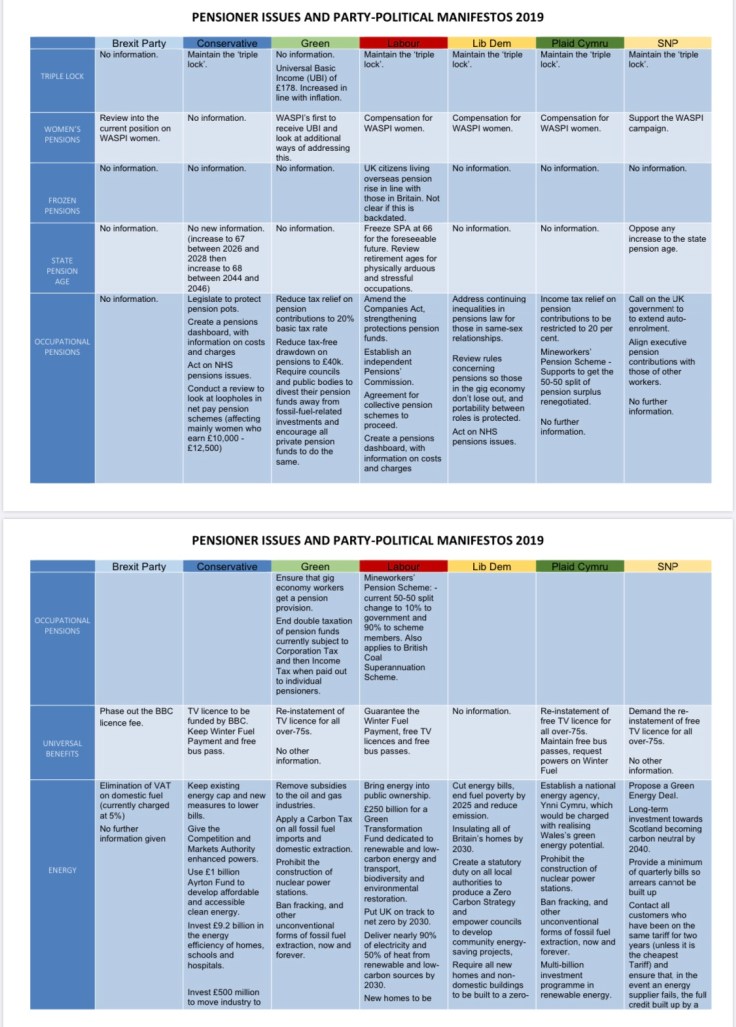
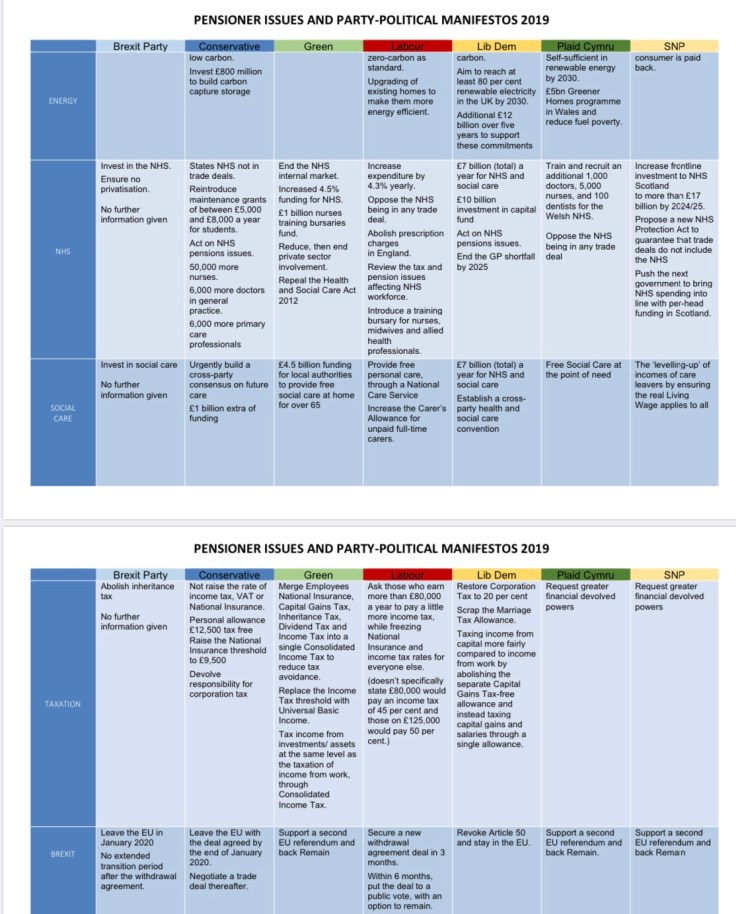
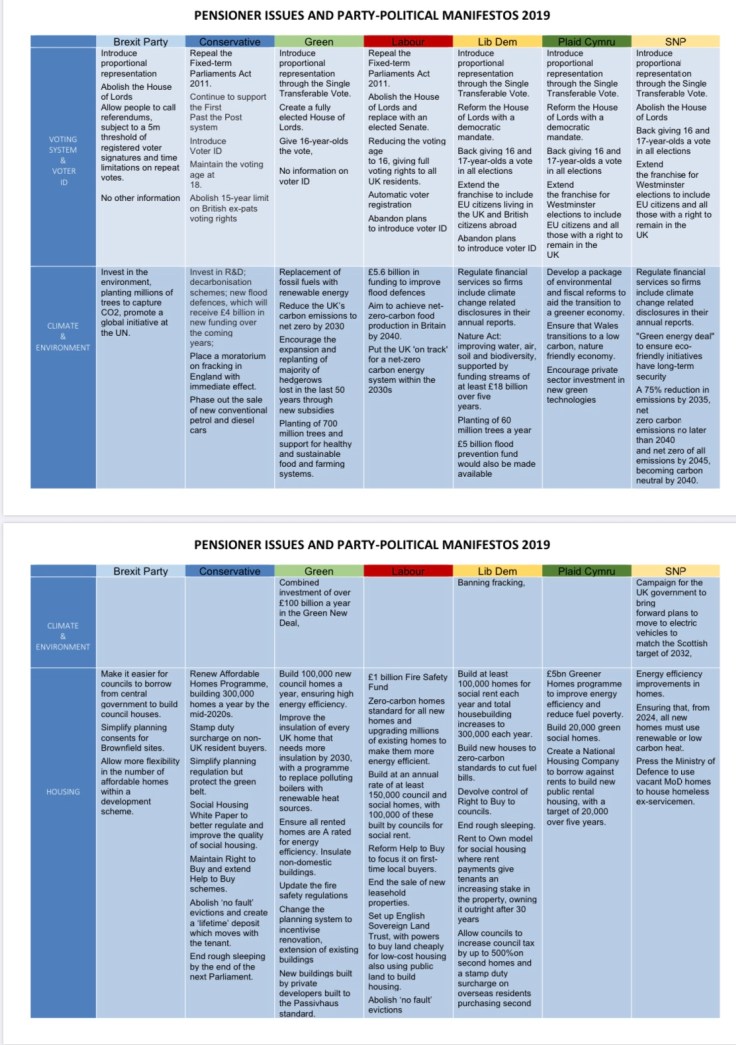
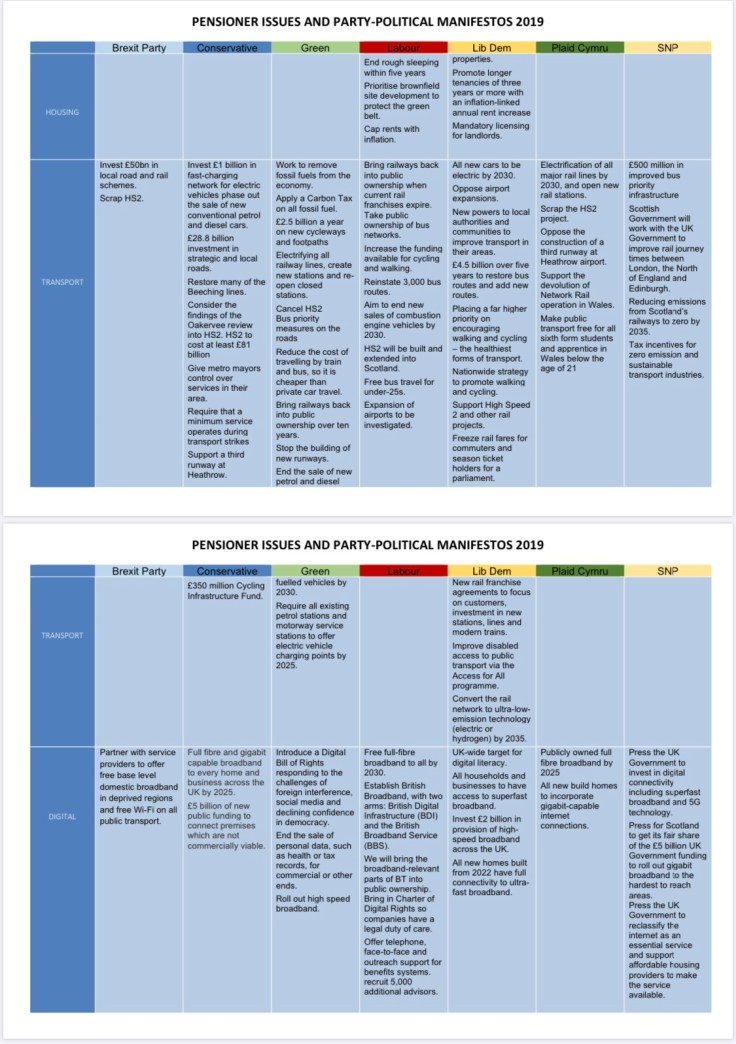
10 things you need to know about Labour’s election manifesto.


POST OFFICE: HORIZON TRIAL – COURT OF APPEAL REJECTION
Further to LTB 669/19 dated 21st November. Today, via the Court of Appeal, Lord Justice Coulson dismissed the Post Office’s application to appeal against the judgment made by Justice Fraser on 15th March in relation to the first Horizon trial – the “Common Issues” trial. In making his judgment, Lord Justice Coulson stated the following:
“In my view, the judge dealt comprehensively with why he refused permission to appeal in his separate judgment of 17 June 2019 which itself runs to 91 paragraphs. The PO have made their further application to this court without taking on board any of the points made by the judge in that judgment. With one or two minor exceptions, I agree with the judge’s detailed reasons for refusing this application for permission to appeal, and regard them as an answer to the renewed application to this court.”
The Judge also noted:
“Many of the PO’s difficulties now are self-inflicted. For example, as happened during the trial and on the application for permission to appeal both to the judge, and to this court, the PO has consistently put its arguments much too high. It made sweeping statements about the trial and the judgment which were demonstrably wrong.”
In addition he was particularly scathing of the behaviour of the Post Office when he said:
“The PO describes itself as ‘the nation’s most trusted brand’. Yet this application is founded on the premise that the nation’s most trusted brand was not obliged to treat their SPMs with good faith, and instead entitled to treat them in capricious or arbitrary ways which would not be unfamiliar to a mid-Victorian factory-owner (the PO’s right to terminate contracts arbitrarily, and the SPMs alleged strict liability to the PO for errors made by the PO’s own computer system, being just two of many examples). Given the unique relationship that the PO has with its SPMs, that position is a startling starting point for any consideration of these grounds of appeal.”
The full judgment is attached to this LTB for your information.
Evidently, this is exceptionally good news for the claimants (a total of 557) and further compounds a dire situation for the Post Office whereby all of the previous judgments over the Horizon issues have gone against them. It will be interesting to see whether the Post Office communicates internally on this matter and how they will try and put a brave face on their continued failure in court.
Further developments will be reported and this will include the Judge’s decision on the second trial known as the “Horizon” trial.
Yours sincerely
Andy Furey
Assistant Secretary
19LTB676 Post Office – Horizon Trial – Court of Appeal Rejection
Royal Mail Materials Handling Containerisation Update & Christmas Arrangements 2019 – Health & Safety Aspects
Below is a summary update on Materials Handling Containerisation Arrangements for the 2019 Christmas period. The contents of this LTB have been discussed and agreed with Royal Mail HQ, Central Containers Team.
1. York Containers
Royal Mail has purchased an additional 10,000 Mk3 York Containers and these, along with 198,000 (Mk1, Mk2 and Mk3) York Containers held in storage, will be injected into the system via the Parcel Sort Centers, RDCs and Amazon. All will be in the network by early December. A total fleet of around 600,000 Yorks will be in service during the Christmas pressure period. The highest number ever.
Royal Mail will be looking for Yorks to be filled with the maximum 7 layers of 4 trays (28 Max), wherever possible subject to safe systems of work, weight constraints of the container and subsequently the vehicle weight limits on to which they will be loaded to comply with Safe Systems of Work and both Health and Safety and Road Traffic Act Legislation.
York Containers primarily carry mainly trays, mailbags, parcels and small parcels and packets in ALP (Auto-Level Packet) Sleeves. They do have other uses, referred to below.
All Mk1, Mk2 and MK3 York Containers introduced in previous years have continued to be maintained, modified and updated through rework programmes as identified by the Royal Mail Assets, Containers and Manual Handling Equipment Team in consultation with the CWU Health, Safety & Environment Department and as previously reported in updates to Branches and Area Health and Safety Reps. Mk’s 1, 2 and 3 amount to the vast majority of the 600,000 York Containers.
All Mk 4 York Containers, 10,000 in total will be put into circulation for the Christmas period and as such the “Mandatory” messages outlined within our recent LTB 571/19 to all offices as follows must be complied with: –
York Container SSoW – (See Attachment)
1(a). York Container ALP Sleeves
Royal Mail, over the last 3 years purchased 98,000 new ALP Sleeves all of which were released into the network. A further 35,000 ALP Sleeves were purchased this year consisting of 14,000 Red Mk1 ALP Sleeves and 21,000 Grey Mk2 ALP Sleeves, which include a modification to allow the ALPs to be automated/tipped within the Parcel Sortation Machine (PSM) Mail Centres (MCs) as part a National Joint Trial as agreed with both the CWU Health, Safety & Environment Department and the Postal Department. These ALPs, along with 28,000 Red Mk1 ALPs which were previously held in storage, will now be put into the network in the run up to the Christmas peak.
A further 1,300 Green Mk1 ALP sleeves (for the use of Special Delivery items only) have also been purchased and will be put into the system over the next few weeks.
1(b). York Container – Cardboard Sleeves
This Year Royal Mail has centrally purchased a further 14,000 New Red Mk1 ALP sleeves with 21,000 New Grey MK2 ALP sleeves (with the Automation/Tipping modification of additional straps) still to be put into the network over the next few weeks, as part of the continuing national trial.
However, as Royal Mail moves further into the busiest period at Christmas, and parcel volumes begin to peak, the need to move parcels through the network quickly becomes critical and demand for ALP Sleeves increases. Even though Royal Mail has put 320,000 additional York Containers and 250,000 additional ALP Sleeves in to the network over the last seven years, amounting to 600,000 York’s in circulation with over half of those fitted with an ALP Sleeve, Royal Mail has informed us that with increasing parcel volumes and large tracked customers there may be problems with sites struggling to get sufficient numbers of ALP Sleeves to meet their operational requirements. The Central Container Team will continue to push the Zonal Areas to ensure that they clear their Delivery Offices every day and repatriations from gaining sites take place but they may still struggle to meet the demand at key locations. Royal Mail has assured CWU/HQ that they will do everything possible to ensure that Zonal Areas repatriate as many York Containers and ALP Sleeves as possible out of their Delivery Offices however the business is now seeing the continued increase in parcel volumes and traffic. As a result, Zonal Areas will probably struggle to get sufficient ALP Sleeves back into their Parcel Sort Centre operations and losing Mail Centers to meet demand. As and when critical emergency situations are reached in Offices, Royal Mail has proposed and CWU/HQ has agreed that as a Christmas contingency only, the use of Cardboard Sleeves/York Inserts will be permitted as a last resort – with agreement with the RM CPC/Container Team as follows: –
(a) As a contingency at Mail Centre’s, PSCs and RDC’s for outward dispatches and inward dispatches.
(b) For outward dispatches by Mail Centres and Parcel Sort Centres.
(c) For 2nd Class parcel dispatches from Mail Centres to PSC’s.
(d) Before this contingency is implemented however the site must ensure that all efforts have been made to get ALPs back from their DO’s and that permission has been sought and been given by the RM Container Team.
(e) Designated and approved Customer Streams to MC and DO (AMZ DI/DDU).
IMPORTANT: – If Cardboard Sleeves/York Inserts are used as a contingency, the site must ensure that:-
(a) The CWU Area Safety Representative and Area Processing Representative are consulted should this contingency need to be implemented.
(b) That the SSoW is followed at all times, rotating duties if necessary.
(c) That the mandatory cross-members and false bases must be fitted and used correctly in Cardboard Sleeved York Containers. Any Offices found not to be compliant with this instruction will be asked to investigate reasons why this has happened and furnish a report on remedial action taken with the report shared with the CWU Area Safety Representative. Such breaches of the SSoW by Management will be viewed as serious!
Once the Christmas pressure period is finished, the contingency use of Cardboard Sleeve Inserts will be withdrawn and Offices will revert back to business as usual with Cardboard Sleeves used on the agreed Amazon/Tracked Contracts only and the parcel operation must revert back to using ALP Sleeves for inward transfers to DOs and outward dispatches to Mail Centres and Regional Distribution Centres.
The cardboard MUST be in good order; the cross member and base must be inserted in compliance with the SSoW at all times.
Under no circumstances is damaged cardboard to be used and it must be discarded locally.
The current, agreed York Container SSoW (See Attachment) includes a section on the use of Cardboard Sleeves, see extract below:-
“Additional Requirements for York Container Cardboard Sleeves
For reference to the Safe Systems of Work (SSoWs) for York Containers and the new design Mk2 Cardboard Sleeves (See Attachment).
1(c). York Containers – Loading Parcels of a Shoe Box Size or larger.
In previous years both Royal Mail, Tracked Customer and Amazon had concerns about the shortage of York Containers across the network and additional costs incurred by losing approximately 15% of York fill capacity when inserting Cardboard Sleeve false bases into York Containers. In line with the York Container SSoW, York Containers will be filled and stacked with parcels/packets larger than shoe box size without any form of Cardboard Sleeve or false base etc. This approach is only applied to larger items and Sleeves, Bases and Cross Members will not be removed for smaller packet items, i.e., those smaller than a shoe box size. Those packets will continue to be loaded into York Containers with either an ALP Sleeve (preferable) or a full Cardboard Sleeve with a cross-member and false base fitted. This was jointly examined and found to be the best approach.
The York Container SSoW states under the heading of ‘Approved Loads’ that ‘Loose strapped bundles, Boxes, provided they are of sufficient dimensions, such as they will be retained by the load retention straps and container framework.’ (See Attachment).
This approach has been ergonomically tested and approved prior to concluding the York Container SSoW. It makes both safety and business sense to apply this principle for larger parcels which are not suitable for loose loading into sleeved Yorks in most cases.
1(d). York Containers – Use of Shrink-Wrap/Cling-Film
The existing agreed national policy remains as follows “There is no agreement whatsoever to use “Shrink-Wrap/Cling-Film” on York Containers under any circumstances. Also, Opsflash – CPC (2008) No 167 instructs all sites that have received new trays delivered on pallets and shrink wrapped to remove and dispose of the shrink wrap immediately. There are NO circumstances where the shrink-wrapping of Yorks is acceptable. This practice must not be allowed at any RM site.
2. RSCs Rigid Stackable Container
4,000 RSC’s will be released from storage between November and Christmas into the RDC network.
RSCs are not intended for use inside Mail Centres and Delivery Offices and are primarily for the Distribution Centre’s network and warehouse environments where there is sufficient space and where risk assessment and Safe Systems of Work requirements apply, in respect of workplace transport hazards from FLTs and crush hazards etc., specific Personal Protective Equipment (PPE) regulations requirements also apply in these work environments, e.g., high visibility clothing and protective footwear. RSCs may only be used in risk controlled working environments as per the Safe Systems of Work.
3. FSC Folding Stackable Containers
20,500 FSCs (a folding version of the RSC) have now been purchased by Royal Mail since 2011. These will be used in areas where they give best cost benefits i.e., sites with limited floor space and gaining sites that can repatriate the units back out more cost effectively as they can be folded down.
Safe Systems of Work (SSoW) are located on a plate on the side of the container. (See Attachment).
MCs/DOs should not receive FSCs, however, if received they should be returned to the local RDC as soon as possible.
4. Cardboard RSCs
As originally reported in LTB 632/05 and successfully utilised during successive Christmas pressure periods since 2005, Cardboard RSCs were introduced to provide additional storage for mail sort Christmas deferred mailings, empty bags and empty trays. These are used primarily in the RDC network over the Christmas period and are being introduced for the storage of empty bags; empty trays and Mail Sort 3 Christmas deferred mailing items during the Christmas pressure period. They will also be used for some bagged customer postings.
These are folding, heavy-duty cardboard containers with the base fixed to a standard wooden pallet.
200 Cardboard RSCs have been held in storage and are available as a contingency for an additional container during the Christmas peak period and intended:
Cardboard RSCs are intended to be:
Cardboard RSCs are:
Cardboard RSCs must be kept under the roof and not exposed to outside elements or humidity. A minimum four uses per cardboard RSC must be achieved. Damaged cardboard RSCs must be cannibalised to maintain serviceable stocks. Vehicles can accommodate more empty cardboard RSCs than steel RSCs per trip. Offices should prioritise the repatriation of serviceable cardboard RSCs ahead of steel RSCs. Cardboard RSCs are produced by, ‘DS Smith’. They are constructed of triple ply corrugated cardboard and are approximately 1.2m wide x 1m deep x 950mm high. They consist of 3 parts: A cardboard tray mounted on a standard 1200 x 1000 mm wooden pallet. A folding sleeve which folds to fit inside the base tray and can be assembled to construct the Pallet Box. A cardboard lid which fits over the sleeve when assembled and over the Base Tray when the sleeve is folded flat inside the Base Tray. They have a carrying capacity of 650kg as a single or double stack. The approximate weight filled with empty trays is 85kg – filled with bags of mail 340kg.
Cardboard RSCs may only be stacked as follows:
Cardboard RSCs may be moved by:
Cardboard RSCs may be secured and moved by vehicle.
The Cardboard RSC SSoW – (See Attachment)
5. ‘A’ Frame Roll Containers
As originally reported in LTBs 838/06 and 840/06, 12,000 supermarket type “Roll Cage” Containers were introduced in 2006 by the Royal Mail Group Procurement Operational Equipment Team, manufactured by “Palletower” and “Cargo Pak”. They were strictly intended for internal use (inside Offices) and for storage purposes only, in order to free up much needed York Containers. Since their introduction, the number of York Containers has doubled and the limitations of these “Roll Cages” have seen them become outmoded against the all-round far superior York Container. These Containers have therefore and will continue to be run down, phased out and withdrawn from Royal Mail service. SSOW – (See Attachment)
For removals of the Containers please contact: container.reporting@royalmail.com
6. Loose Loading of Mail Bags – Christmas 2019
Further to enquiries and concerns raised by Branches and Area Safety Reps in previous years regarding possible loose loading, Royal Mail has confirmed they will be taking a number of steps to ensure that loose loading of mail should only take place in exceptional circumstances, as a last resort.
If loose loading has to occur, local CWU Reps will be consulted and the Manual Handling/Loose Loading SSOW will be adhered to.
Clear instructions have been issued by Royal Mail HQ CPC that should any service which is normally containerised have to be loose loaded, then the dispatching unit must inform the receiving unit in advance so that they can provide any additional staff resources and working arrangements which may be necessary to ensure health and safety standards are maintained.
Extract from Loose loading Core Risk Assessment: –
It is a Royal Mail goal that no manual handling task will exceed risk level 2. Mail Bags average 7kg, maximum gross weight 11kg. Lifting frequency up to 7 bags/minimum over a 30 min period (then rest). Vehicle doors are adequately maintained and must be in good working order.
Priority Services bags could exceed 11kgs but they should be clearly labelled with the weight so that special consideration can be given to lifting. NB: No Priority Services bag exceeding 11kgs should contain more than 1 item. All equipment is used in accordance with the appropriate Safe System of Work. All staff to have received manual handling training and instruction or refresher training during the past 3 years. All staff to understand and operate the appropriate Safe System of Work. If there are any tasks that are not listed, the manager must consult the safety team for further advice. No pregnant worker or person under 18 should undertake tasks greater than risk level 1.
7. Plastic Letter Trays
Last year RM purchased 1m trays which stayed in the system. Royal Mail has purchased an additional 700,000 trays this year and all will be released from stores and delivered directly from suppliers during October, November and December.
8. New Blue Bags for International Dispatches
2.5 million new blue bags for international dispatches have been purchased this year and will be fed into Mail Centers via direct delivery in November ready for the DSL Operation.
New RM International MB4L bags for automation:
RM International has this year deployed a new larger Blue Bag for use within its Automation Streams known as the MB4L. These bags are not to be used in RM domestic postings and are designed for export only and only to be handled and used within RM International Sites.
9. Pallets – Transportation, Processing, Unloading and Stacking of Pallets
This year Royal Mail has again faced an increased requirement from bulk customers to accept and process palletized loads, including shrink/stretch wrapped palletized traffic. The SSoWs have therefore been reviewed to ensure sufficient up to date information and instruction is available to allow Offices and managers to control safety risks for the specific tasks and ensure the correct work methods are adopted and materials handling equipment deployed for this increasing area of work to ensure it can be completed safely. The new, updated SSoW and associated, embedded SSoWs are attached. This includes embedded documents – Pallet Truck SSoW, DDT SSoW, Palletising of Trays SSoW, and Manual Handling SSoW. (See Attachment).
10. Repatriation of York Containers, ALPs, Trays and Cardboard
To ensure we keep our sites safe and clear throughout our busiest time of year with the largest volume of containers within the network, Delivery Offices are to ensure that MHE repatriations are presented in the agreed locations and fully nested and consolidated in line with the York SSoW and identified on the offices Yard Risk Assessment. This will ensure we not only avoid congestion and potential safety issues but will also ensure we can maintain supply of our customers so that we can deliver a fantastic service.
We encourage our members and local WSR/ASRs to report container volume issues within their respective Delivery Offices to container.reporting@royalamil.com so that they can assist in site clearances and ensure we support the operation and customer requirements.
11. Repair of Faulty & Damaged Containers, Sleeves, Trays
All damaged containers must be withdrawn and repaired before being brought back into service. The following instructions relate to the repair of the individual containers:
(a) Letter Trays
– There are any obvious physical defects such as breakages or holes (other than those designed).
– The tray sides or bottom are split.
– The handle is damaged e.g., split.
– The label holder is damaged in such a way as to render it unusable.
– The barcode or barcode clip is missing.
– The tray bottom is bowed.
– Only the corners are chipped and then only if the break does not leave a jagged or pointed edge.
DAMAGED TRAYS:
SEND TO AAC via NDC
(b) York Containers
Examples of damage:
The repair process is as follows:
Damaged Yorks may be moved, on existing services, from non-repairing sites to a consolidation site (see repair process above) to await repair. Damaged Yorks should be labelled accordingly so that the receiving site is aware.
Damaged Yorks must not, however, be used to form part of a movement order to another site and should never be sent to a customer. Neither should damaged Yorks knowingly be used to convey mail through the network.
Some straps have given the appearance of losing their elasticity but tests have been carried out at the manufacturer and replicated by our engineers in Swindon and the results show that this does not affect load retention or the safety of the York. It is not, therefore, necessary to replace such straps.
Short Strap repairs, can be carried out locally at any site for more information contact container.reporting@royalmail.com
(c) RSC and FSC
– Sharp, jagged or pointed hazards.
– Anything which prevents proper assembly or movement.
– Temporary or amateur repairs.
– Broken welds.
– Broken side wires bent inwards or outwards.
– Excessive corrosion.
– Mis-aligned feet or spigots which hinder stacking.
(d) Auto Levelling Packet Sleeves
(e) York Cardboard Sleeves
(f) Cardboard RSCs
Any damage needs to be checked. The following damage would render the Cardboard RSC unusable:
The following would not necessarily render the Cardboard RSC unusable:
If there is any doubt as to the safe condition of the Cardboard RSC, then it must be considered damaged. Any damage which renders the sleeve unusable needs to be reported and the damaged part (i.e., the lid, sleeve or tray) marked with a cross from a thick marker pen. Only the damaged part needs to be marked as the undamaged parts may be used as spares.
Transport and transfer equipment must meet the receiving customer’s safety requirements.
(g) Wheeled Container Repair Process including Mini Yorks (Other than York Containers)
The following process should be used to keep wheeled containers functional:
(h) General note on containers:
If there are any surplus containers on site that are not damaged and you are unsure of where to send them, you should consult your Regional Head of Assets for Yorks, Trays and Sleeves or your Container Equipment Manager for RSCs.
14. Contacts & Phone Numbers – IMPORTANT
Should Area Safety Representatives wish to discuss any issues or questions in relation to Container Control or Container Equipment, the following field managers can be contacted for all Royal Mail Container related issues:-
National Team Contacts
National Asset Supply Chain Manager Gary Yeo – 07872 636537
National Container Supply & MHE Manager Ian MacDonald – 07436 560875
Container Manager North Clare Smith – 07872816461
Belfast, SDC, Edinburgh, Perth, Inverness and
Aberdeen, Warrington, Chester, NWDC, NWPSC
Tyneside, Darlington, Preston, Chorley,
Carlisle, Manchester, Stockport, Leeds,
Bradford, York, YDC, Sheffield, Doncaster and
Hull, Nottingham, NEPSC, East Midlands Airport
Crewe, Shrewsbury
Container Manager South Sid Rajan – 07802 921737
HCN, NHCDC, Greenford, PRDC, Jubilee, Guilford and
Woking, Derby, Coventry,
Leicester, Peterborough, Cambridge, Norwich and Ipswich
Chelmsford, Southend, Medway, SEDC, Canterbury,
Tonbridge, Croydon, Gatwick, London Central,
South Warwick, Victoria, Romford and Whitechapel
Container Manager Amazon (All Sites) Chris Rogers – 07860 172019
Container Manager International Nalin Mandalia – 07715480197
HWDC and LAMU, Atherstone international
15. Health & Safety Processes
From a Health and Safety point of view the CWU Health, Safety & Environment Department will continue our joint work with Gary Yeo RM National Asset Supply Chain Manager and Ian MacDonald RM National Container Supply & MHE Manager along with the SHE (Safety, Health and Environment) Team and the RMPFS Property Safety and Compliance Team to monitor health and safety throughout the Christmas Operations.
16. IR Aspects
The IR aspects of the Christmas pressure period are dealt with by the Postal Department. All Operational enquiries should be addressed to the appropriate Postal Department Operational Officer.
Appendixes:-
Yours sincerely
Dave Joyce
National Health, Safety & Environment Officer
York Container Mk 4 Additional Requirements SSoW v2.1
York and Mini-York Safe System Of Work v3.1
Transportation, Processing, Unloading & Stacking of Pallets
National Communication on MK2 ALP sleeve with CWU
Foldable Stackable Containers SSOW
Cardboard Sleeve York Container Additional Requirements SSoW v1.1
CWU Dispute with Royal Mail Group
Further to LTB 662/19, please find attached for your information (Appendix 1) an exchange of correspondence that has taken place today between myself and Rico Back, CEO of Royal Mail Group, the content of which is self-explanatory.
This was an opportunity for Rico Back to respond to all of the issues in the CWU’s open letter (sent on 15th November 2019) and to reassure everyone that their public offer of talks was genuine. Unfortunately however he has not grasped that opportunity and has failed to answer any of the significant issues raised by the CWU. We can therefore only assume that his letter is another stunt to try and satisfy the shareholders and investors as RMG published their half yearly results.
Sadly his letter is meaningless and offers no more than what has already been offered. Nothing has changed and we will continue to campaign, appeal the High Court injunction and re-ballot if necessary in defense of our Agreements, our members and this great public service.
You will note that I have again requested a proper formal response which addresses all of the issues in the CWU’s open letter, many of which were External Mediator recommendations.
In light of the above, ‘National Gate Meeting Day’ tomorrow needs to be loud and proud, and as powerful as possible because the business, opinion formers, shareholders and investors need to understand that we will not be moved and we will continue to fight until we achieve an acceptable resolution to this dispute.
Branches and Representatives are asked to give this LTB the widest possible circulation and to ensure that it is brought to the attention of all colleagues in advance of National Gate Meeting Day tomorrow. We shall not be moved.
Any enquiries in relation to the content of this LTB should be addressed to the DGS(P) Department.
Yours sincerely,
Terry Pullinger
Deputy General Secretary (Postal)
19LTB674. CWU Dispute with Royal Mail Group
LTB 674.19 Appendix 1 Correspondence Exchanged between DGSP & R. Back CEO of RMG
SPECIAL REPORT
URGENT MESSAGE FOR BOTH MEMBERS AND NON-MEMBERS IN THE PROCESSING, DISTRIBUTION AND COLLECTION FUNCTIONS AT PETERBOROUGH MAIL CENTRE.
CHRISTMAS AGREEMENT DISAGREEMENT
Dear colleagues
It is with regret I must write the following report. For the last 18 years the local Christmas agreement has included the suspension of the EuropeanWorking Time Directive (EWTD) for seasonal workload purposes and all pre-scheduled overtime paid at scheduled attendance (SA) rate of pay for the four weeks of Christmas pressure. The EWTD has been suspended for those members of staff who wish to work more than 70 hours per week without the weekly rest breaks with previous agreements allowing 72, 72, 80 and 80 across the four weeks of Christmas pressure. The pre-scheduled overtime paid at SA rate has been a reward to staff for their commitment and hard work during the busiest time of year and to avoid the task of negotiating, advertising and allocating temporary SA’s for thepressure period.
This year Royal Mail have told us they do not want to pay pre-scheduled overtime at SA rate, and they want to enforce the EWTD across the four weeks of Christmas pressure. The CWU could not agree to this and quickly progressed the disagreement through stages 1&2 of the Industrial Relations Framework (IRF) locally to the stage 3 meeting which was held last week at the Mail Centre. At themeeting several compromises were put forward as potential temporary measures. However, we could not agree on a final compromise withoutdisadvantaging various groups of members of staff. Therefore, the process was progressed to aFlashpoint meeting. This meeting was held yesterday, and we still could not get an agreement and therefore the process has been progressed to a National Intervention Stage 4 meeting.
The Royal Mail/CWU National Industrial Relations Framework Agreement states:
Whilst at disagreement the “Status Quo” will apply which is, the company and its managers will continue to apply all national/local agreements or whatever practice which has been in place for at least one working week prior to entering the disagreement process. This is a contractual legal requirement of the legally binding contract between Royal Mail and the CWU.
The CWU’s views are the status quo in this instance is last year’s Christmas agreement which paid all pre-scheduled overtime at SA rate and the suspension of the EWTD for the four weeks of Christmas pressure. We should go into Christmasthis year following the guidelines of the 2018/19 agreement.
Royal Mail’s view is, whilst we are at disagreement,they will not pay SA rate for any pre-scheduled overtime and will enforce the EWTD on all employees during the Christmas pressure period.
The CWU believe Royal Mail will be breaking thelegally binding Joint National IRF Agreement by taking this executive action.
It is our hope that the National Intervention Stage 4 meeting will take place in time for this year’sChristmas pressure period. However, if this is not the case, we would hope it will take place after Christmas and if successful we would seek retrospective payments for our members who had not been paid at SA rate.
There was a time when Royal Mail staff were recognised and appreciated for the extra hard work and commitment, they gave to provide the service at the busy Christmas time. Sadly, this now seems to be a thing of the past and this issue reflects what is going on Nationally.
Regards
EJ Orviss/L Smith
Area/Sub Area Processing Representative
Date 19/11/19
As previously advised in LTB 622/19, the CWU Young Workers Conference will be held on Tuesday 21stJanuary 2020 at the Marriott City Centre Hotel, 2, Lower Castle Street, Old Market, Bristol, BS1 3AD
Branches are reminded that the closing date for motions to be returned is midnight on Tuesday 10thDecember 2019. Motions should be submitted electronically to conferences@cwu.org using the template attached. All sections of the form must be completed. Motions will only be accepted if sent to the above email address.
Each Regional Young Workers Sub Committee will be entitled to submit ONE motion to the Conference Agenda.
Each Branch will be entitled to submit ONE motion to the Conference Agenda.
The Young Workers Committee will be entitled to submit THREE motions to the Conference Agenda.
Branches, Regions and the Young Workers Committee are reminded that the Standing Orders Committee will not alter or amend any of the motions submitted therefore it is important that motions are checked before they are submitted.
Branches are reminded that registration for this event will be done using the online registration system. Once the online site is ready an LTB will be issued with further details.
Yours sincerely,
A P Kearns
Senior Deputy General Secretary
Election spending and campaigning
The purpose of this LTB is to give branches a guide to spending and campaigning in the general election, following on from the information provided at the national briefing on 8th November.
Attached to this LTB are guides from the Electoral Commission on campaigning and spending that set out the rules in greater detail, but the following is a summary of rules branches should be aware of. To be clear, these relate to spending on campaigning/activities that the union is carrying out. Where a Branch or Region has donated money to a local Labour Party the party has separate rules relating to its expenditure that it must comply with.
It is also important to stress that we want branches and regions to be undertaking as much campaigning as possible between now and 12th December and the purpose of this information is to ensure we do so in the right way.
1. Reporting expenditure
After the general election, we will need to report all of our campaigning expenditure by 12th March 2020. This will cover everything that branches, regions and the union nationally has spent between 12th December 2018 and 12th December 2019 on political campaigning.
The test for this is whether spending is on an activity that could “reasonably be regarded as intended to influence voters to vote for or against a political party, or categories of candidates, including campaigns on policies or issues closely associated with a particular party or category of candidates.”
We will be asking branches to provide a full breakdown of expenditure after the election date on 12th December – branches must therefore keep a comprehensive record of this, with receipts and invoices, throughout the election.
2. Spending limits
It is important that branches talk to regions about any campaigning activity they are undertaking in advance to ensure this falls within the relevant spending limits. The most important spending limits for branches and regions to be aware of are as follows:
Branches should speak to their Regional Secretary about campaigning activities and any expenditure they are planning in advance. This is particularly important where the candidate is a CWU member.
3. Door-knocking and canvassing
We want members to be out door-knocking, canvassing and campaigning as much as possible in support of local Labour Party candidates. It is important that where they are doing so, they do this in their own time and are not accruing expenses (on travel or release). Any expenditure on this would be a donation in kind to the local party and would need to be agreed by them in advance to ensure they do not breach spending limits.
4. Imprints
Any campaign material must include an imprint specifying the name and address of the printer and the promoter. Any CWU campaign material printed by a branch should state on it: Promoted by Dave Ward General Secretary, CWU, 150 the Broadway, Wimbledon, SW19 1RX; Printed by [the relevant CWU branch and its address / the name and address of any external company doing the printing for us].
If a branch or region is printing material for a local Labour party/candidate, the imprint will need to specify that it is printed by the CWU and promoted by the candidate’s agent (or whoever they specify) – the details should be confirmed with the local Labour party.
Finally, for social media graphics or videos, an imprint should be included but if it would not be legible, branches or regions should make sure the union’s logo is visible so it is identifiable as coming from the CWU.
5. Joint campaigning
There are specific rules about how expenditure is declared where there are joint campaign activities. For instance, if we do a joint leaflet or rally with another union and split the costs for it, we would still need to declare the total costs of the leaflet or rally as part of our expenditure (even though we would only have actually paid part of the costs).
Where there are any joint campaign activities branches should talk to their regional secretary about these in advance to check how this needs to be dealt with.
6. Invoices
Where we are paying an external supplier/organisation for services (e.g. printing material) we must ensure that they invoice us within 30 days and that all invoices are paid within 60 days after the general election on 12th December. Where neither of these things happen branches or regions must notify CWU headquarters at the earliest opportunity.
Conclusion
As set out above, we want branches to be as active as possible in the general election and there is a huge amount at stake for our industries and our members. This note is not intended to stop branches campaigning, but to ensure we comply with relevant requirements when doing so – if in doubt branches should speak to their Regional Secretary.
Any queries on the contents of this LTB should be address to gsoffice@cwu.org copying in the relevant Regional Secretary.
Yours sincerely,
Dave Ward
General Secretary
BT PERSONNEL – CWU Representatives and Officers Mental Ill Health Survey
Attached, for the information of the BT Committee, are the outputs of a Mental Ill Health Survey of Branch Representatives and Officers. The purpose of the survey was to understand what mental ill health awareness, guidance or training the representatives have and what they may need to deal with mental ill health issues raised with them from members and other representatives.
The motivation for the survey was Motions 35, 71, and 76 carried at this year’s Conference and the concerns raised by Branches. In order to deal with the issue the team believed we needed to understand how well equipped representatives are to deal with the increasing workload related to mental ill health.
The outputs give valuable insights into the number of representatives who have, or have not, had awareness guidance and training. 128 people responded in total which is approximately 25% of the total number of representatives.
Below is a brief summary of the outputs from the questions.
1. Have you had any form of mental health awareness guidance or training?
All those completing the survey answered the question. 56.7% said YES and 43.3% answered NO.
2. What was the training/guidance you received?
72 people answered this question with 62.5% having undertaken Mental First Aid courses and 37.5% attended other types of courses.
3. Was the training/guidance provided through the CWU, your employer or another party?
Again 72 people answered this question with 61.1% undertaking training with the CWU, 8.0% employer, 9.7% both employer and CWU and 20.8% other.
4. Do you feel that you need mental health awareness guidance/training?
126 people answered this question; 81% of people feel they need guidance and training with 19% not needing further training.
5. What level of training do you feel that you need?
102 people answered the question with 41.2% needing introductory training, 39.2% needing advanced training and 19.6% needing refresher training.
6. Do you think the CWU should provide mental health awareness guidance/training to its representatives?
126 people responded to this question with 98.8% giving a YES response and 3.2% a NO response.
7. Do you think the CWU should be calling on your employer to provide you with mental health awareness guidance/training?
127 seven people responded with 92.1% with a YES response and 7.9% with a NO response.
8. Are there any particular areas of mental health awareness guidance/ training you feel would be helpful to you? (Tick all that apply)
All the five sub questions received high scores with ‘signposting members to get the support they need’ receiving the highest score of 92.7%.
9. What proportion of your time is taken up with mental health issues raised by members?
The answers to this question received percentage scores from 1% to 23% of time taken up dealing with mental ill health issues.
10. Please add any further comments related to your experiences or training needs.
The responses from this question were really useful in helping us determine what representatives need in the way of guidance, awareness and training but also some concerning comments from Branch Officers about their own mental health.
There were 130 comments made with reference to an increasing workload on this issue and a realistic point that Branch Officers need to guide members to experts rather than try to deal with the issue themselves. There is also reference to young people being more likely to raise mental ill health problems.
Most respondents felt that awareness, guidance and training is a help in dealing with the issue, and if the response rate is reflective of our representative base then we have at least 50% of Branch representatives having some form of mental ill health awareness.
In conclusion, this survey has been a valuable exercise. The Personnel Team will respond to the needs of our Branch officials and to make the membership aware that a significant number of their representatives have the awareness to guide them to the help they need. Some of this work has already started.
Yours sincerely
Dave Jukes
Assistant Secretary
20.11.19 – LTB 670 – BT PERSONNEL – CWU Representatives and Officers Mental Ill Health Survey
POST OFFICE: HORIZON TRIALS – BATES & OTHERS VS POST OFFICE LTD – FURTHER UPDATE
Further to LTBs 234/19 dated 12th April and 292/19 dated 14th May. Branches will be aware of a Group Litigation Action against the Post Office by 557 mainly former Postmasters in relation to alleged errors with the Horizon computer system.
This matter goes back over a period of more than 10 years and was finally brought to trial after the Justice for SubPostmasters Alliance (JFSA) spent many years campaigning for justice. In January 2016 Alan Bates from the JFSA secured the financial funding (through Therium Group, a specialist litigation funder) to take the Post Office to the High Court. Litigation specialists such as Therium cover the costs of a case in return for a proportion of any damages awarded.
It should be noted that these Postmasters needed to find a source of support as the National Federation of SubPostmasters (NFSP), the only organisation recognised by the Post Office for representing Postmasters, did not meaningfully support the claimants through the various stages of their ordeals (even though a significant number of the 557 have been NFSP members at some point). The NFSP, which was formerly a Trade Union but is now a Trade Association (as it was struck off by the Certification Officer in 2013), has previously been cited by the lead Judge in the Horizon cases as not being independent of the Post Office. This was highlighted in Judge Fraser’s ruling of 15th March 2019 when he stated:
“It is obvious, in my judgment, that the NFSP is not remotely independent of the Post Office, nor does it appear to put its members’ interests above its own separate commercial interests.”
“The Post Office effectively controls the NFSP”.
Currently there are at least four trials planned in relation to this complex case. A brief synopsis of the trials and decisions so far is as follows:
1. The First Trial – the “Common Issues” Trial – Judge Rules Against the Post Office
The “Common Issues” trial concerning the legal construction of the contract between the Post Office and Postmasters took place in November/December 2018. On 15th March 2019, the Honourable Mr Justice Fraser ruled in favour of the claimants.
2. Post Office Application for Recusal of the Judge – Mr Justice Fraser
Following the Judge’s ruling against the Post Office and in favour of the claimants in the “Common Issues” trial, on 21st March, the Post Office made an application for the sitting Judge to be recused (remove himself from future trials). The recusal hearing took place on 3rd April and the 77 page judgment was handed down on 9th April. Mr Justice Fraser made the decision NOT to recuse himself from the second trial and indeed the third and fourth trials. The Post Office’s QC asked the Judge for permission to appeal which was not granted. Therefore the Post Office went directly to the Court of Appeal to ask for permission to appeal.
3. Court of Appeal Refuses Post Office’s Appeal
On 10th May, without a formal hearing, at the Court of Appeal, Lord Justice Coulson made the decision to refuse the Post Office’s appeal in regard to the recusal of Judge Fraser.
4. Post Office Appeals the decision of the First Judgment in The “Common Issues” Trial
Judge Fraser also refused the Post Office permission to appeal the “Common Issues” trial judgment. The Post Office therefore applied to appeal directly via the Court of Appeal. However this application was initially rejected by the Court of Appeal due to its length. A shorter application was submitted in June 2019. The Court of Appeal’s decision is expected to be handed down any day now (see 6.a. below).
5. The Second trial – the “Horizon” Trial Recommences
Following the Court of Appeal’s decision to reject Justice Fraser’s recusal, the second trial, known as the “Horizon” trial recommenced on 4th June (it had been temporarily suspended following the Post Office’s application to recuse the Judge), with the Managing Judge, Mr Fraser residing. This trial finished on 2nd July and a decision is awaited.
6. Two Decisions/Outcomes Awaited
a. Lord Justice Coulson’s decision on the Post Office’s application to appeal the first trial judgment is anticipated by Friday 22nd November.
b. The judgment from the Second Trial – the “Horizon Trial” is due any time now.
7. In the Meantime, Mediation is Due to Commence 27th November
Judge Fraser also ordered that the parties should “consider” mediation. During week beginning 14th October, Freeths, the Postmasters’ solicitors, issued claimants a communication stating:
“an independent and neutral expert is being appointed who has experience in helping to resolve very significant disputes. There will be a mediation meeting with the Mediator in November and we are obviously working very closely with your Steering Committee to plan for that and to decide whether it could offer you, the Claimants, a final resolution that would be in your best interests.”
Some Postmaster claimants may understandably be sceptical in regards to mediation as the Post Office set up a complaint and mediation scheme in 2013 which collapsed within 18 months. In parliament, James Arbuthnot MP (now Lord), who was particularly instrumental in raising this matter in Westminster, described the scheme as a “sham”. However, the parties have now agreed to go ahead with fresh mediation and it is scheduled to commence from 27th November. Freeths noted the following in a statement to the claimants:
“Progress will be made only if the Post Office demonstrate a significant change in mind set and approach. If mediation gives the Claimants an opportunity to achieve final closure on acceptable financial terms, then that is to be welcomed – if that does not happen, then the litigation obviously continues. Either way, we will not allow the litigation to be held up while mediation happens.”
8. Third Trial Scheduled for 2nd March 2020
The third trial, referred to as the “Quantum” trial is scheduled to commence from 2nd March 2020. This trial will be in relation to how much the Post Office should pay the claimants if they lose.
Depending on how the mediation talks go, there could well be between four and six trials in total in this case.
9. Criminal Cases Review Commission (CCRC) – cases “Stayed”
Separate to the Group Litigation, the Criminal Cases Review Commission is investigating around 30 Postmaster prosecutions by the Post Office where it is claimed there is a miscarriage of justice. These relate to former Postmasters who have previously been criminally prosecuted and in some cases even imprisoned due to Horizon issues. This investigation began in April 2015 and the cases were “stayed” until after the outcome of the technical aspects of the litigation.
Legal Costs
The Post Office Report & Accounts for the year ending 31st March 2019, published on 15th October, showed legal costs for the 2018/19 financial year were £20m compared with just £3m the previous year. Clearly, the impact of the Horizon cases means the legal costs will have an even greater impact on the current year’s results. In this regard, attached to this LTB is a report (blog) from Nick Wallis, journalist, who has been covering the Horizon Trials from the very beginning. Nick attended a “Costs Hearing” at the Royal Courts of Justice on October 23rd. At this hearing, it transpired that combined costs of the two legal teams were at least £36.3m up to September 3rd this year. This figure is relevant as the Post Office has up until now, had to pay 90% of the claimants’ legal costs as a consequence of losing the cases thus far. Crucially, these figures don’t include the money spent by both parties in preparation for the Court of Appeal hearing. Nick Wallis estimates that the current costs are more likely to be in excess of £42m by now and rising.
Alternative Dispute Resolution (ADR)
Nick Wallis has also reported that at the Costs Hearing, the Judge directed both parties to enter into formal mediation (see point 7. above) via a process called “Alternative Dispute Resolution”. Essentially this is a structured method for resolving matters outside of the court room. The following quote from the Post Office’s Barrister to Justice Fraser is revealing:
“There’s no shying away, my Lord, from the fact that Post Office has spent and proposes to spend a great deal of money seeking to settle the litigation at this stage. It’s seeking to devote resource proportionate to what it’s spending on fighting the case trying to settle it, trying to resolve it by compromise. If one puts the costs of settlement in the context of the total costs of the proceedings, whilst very substantial, they are not out of line.”
Evidently the Horizon litigation has thus far not gone the way the Post Office would have liked and should this direction of travel continue the costs and compensation to the claimants could be colossal. Whatever the end position regarding this matter, what is clear is that public (taxpayers’) monies have been put in jeopardy as a consequence of the actions of the Post Office.
My interpretation of the above is that the Post Office is budgeting to pay in excess of £100m in compensation payments to the 550+ members of the Group litigation claim. It is though highly conceivable this figure will end up being an underestimate of what it will cost the Post Office eventually.
Media Coverage
With regards to media coverage on this matter, it has been fairly quiet recently due to the obvious media focus on Brexit and the General Election, although the story has featured heavily and regularly in Computer Weekly. However, we anticipate there will be a fair amount of coverage following the announcements of the two decisions outlined above, which we expect to be by the end of this month.
Further Details on the Horizon Trials
I would like to remind Branches of the useful website set up by the journalist Nick Wallis who has been following the case closely. Nick provides a concise and clear summary of the events so far. The link to the website is as follows (note parts of the website are free and some sections you have to subscribe to):
https://www.postofficetrial.com/2018/07/about-me.html
Conclusion
I am certain at some point, probably once litigation has concluded, there will have to be some very serious Parliamentary scrutiny and examination of what has actually transpired here and in particular what were the Post Office policies and governance arrangements (bearing in mind that the Post Office is Government owned via BEIS) that have led to these significant legal claims.
Somebody ultimately has to be accountable to these events that have had such a devastating impact on so many people and their families. These Postmasters were ordinary people who were just trying to earn a living whilst providing such an important public service to society. The traumatic impact on so many indicates a gross injustice on a scale that is nothing short of a national scandal.
Further developments will be reported.
Yours sincerely
Andy Furey
Assistant Secretary
19LTB669 Post Office – Horizon Trials – Bates & Others vs Post Office Ltd – Further Update
JOINT STATEMENT BETWEEN ROYAL MAIL NATIONAL LOGISTICS AND THE CWU REGARDING BANK HOLIDAY RESOURCING FOR NETWORK PROFESSIONAL DRIVERS, CHRISTMAS 2019/20
Colleagues will recall that as an integral part of the 2007 Professional Drivers Agreement, Bank Holidays effectively became normal working days for Network LGV Drivers and while we have long had an understanding with the business that where possible attendance would be on a voluntary basis, in reality our members can be compelled to attend on those days where sufficient numbers fail to volunteer. In line with the PDA, all staff who attend are credited with a lieu day.
Branches and representatives will be aware that in addition to the generic Christmas Arrangements Agreement the department has in previous years reached agreement with Royal Mail Logistics on specific guidelines covering the resourcing of Network LGV duties across the Christmas and New Year Bank Holidays.
In line with previous arrangements discussions have therefore taken place with the business and the attached Joint Statement has been concluded and endorsed by the Postal Executive.
The Joint Statement reaffirms the following commitments:
Advance planning
A wholly voluntary approach to any attendance on Christmas Day
The use of the full range of resourcing options to reduce the burden on our members
A commitment to only run essential services on Bank Holidays
A commitment to minimise any mandatory attendance – no driver asked to attend on both the Boxing Day and New Year Bank Holidays
Much like in previous years the department believes that the attached clarification provided in relation to the arrangements for 2019/20 will be welcomed by representatives and members.
Any enquiries in relation to this LTB should be addressed to Davie Robertson, Assistant Secretary, email: shayman@cwu.org quoting reference number: 206A.13.
Yours sincerely
Davie Robertson
Assistant Secretary
Attachment 1 – JS Christmas Resourcing for Network Drivers 20.11.19