



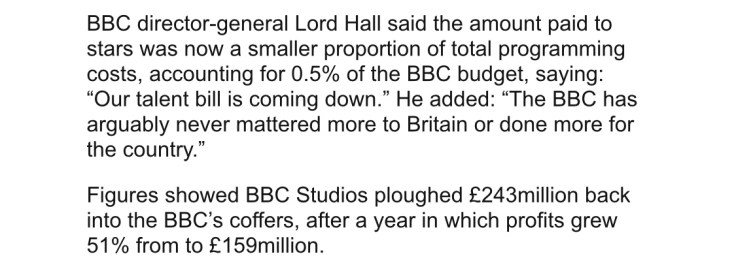
BBC stars’ TRUE pay revealed – after loophole conceals millions paid to top names.


Workers of the world unite; you have nothing to lose but your chains. Karl Marx.
Action Mesothelioma Day 2019: (5 July)
Worldwide at least 38,000 people die every year from Mesothelioma, a fatal asbestos-related cancer. These deaths cause so much heartbreak and suffering. They leave huge holes in families; ones that can never be filled. Asbestos fibres are invisible to the naked eye, therefore it is so important for people to know where asbestos can be found, so these deaths can be prevented.
Taking place tomorrow, (5 July), Action Mesothelioma Day, brings together patients, carers, families and local dignitaries in Britain for services of remembrance and hope, commemorating the thousands of lives lost to Mesothelioma. The day is organised by Mesothelioma UK.
Asbestos related Cancer Deaths – Statistics
According to the Health and Safety Executive (HSE) the number of Asbestos related Cancer deaths have continued to increase over recent years which reflect occupational exposures that occurred many years ago because there is a long time lag between exposure in most cases and the onset of the disease. The HSE expects deaths from Mesothelioma to continue to rise for the next four to five years. Asbestos was used very extensively all the way up to 1999 when it was finally banned in the UK so we have quite a stock of buildings with asbestos-containing materials in them. As well as people working in construction and related industries, Mesothelioma has claimed the lives of women who inhaled Asbestos dust as they washed their husband’s work clothes.
The tragic legacy of Asbestos means that someone dies every five hours in the UK and the World Health Organisation reports that Asbestos-related lung cancer, Mesothelioma and Asbestosis from occupational exposures results in well over 100,000 deaths a year worldwide.
At present no effective treatment or cure exists.
Those affected are workers from a wide range of industries and occupations. In the past construction workers, railway workers and ship yard workers were exposed in large numbers. People who have lived near asbestos factories in the past and families of workers who have unintentionally brought the deadly dust home on their work clothes and overalls have been affected.
With 100,000 tonnes of Asbestos containing materials still in buildings built before 2000, those tradesmen e.g. Buildings Maintenance workers, Plumbers, Electricians, Joiners, Gas fitters, Heating and Ventilation Engineers, IT and Telecommunications workers and others – working on and maintaining the buildings or carrying out alterations or installations etc., are the ones at risk today if safety precautions are not followed.
There is no safe threshold of exposure to asbestos fibres, meaning that inhalation of small quantities, even over a short period, can lead to Mesothelioma decades after exposure. Mesothelioma normally has a latency period of around 30–40 years.
Mesothelioma
Mesothelioma is a rare and incurable form of cancer, caused almost exclusively through the inhalation and retention of Asbestos fibres. The condition mostly affects those individuals who worked within roles that involved the use of Asbestos. However, it has also been known to affect individuals who spent many years employed within an Asbestos-contaminated environment.
Types of Asbestos
There are three main types of Asbestos – Blue, Brown and White. Blue is the most toxic but no type is safe. Many are still ignorant of the dangers of Asbestos and the cancers it can cause. At least three other types of Asbestos exist but were less commonly used. Fibres lay dormant in the lining of the lungs or abdomen and the slow growing cancer symptoms can appear 15 to 50 years after exposure has taken place. As Asbestos was thought of as a ‘miracle fibre’ because of its strong resistance to heat, fire and chemicals, it was used in a variety of materials and products in the home and industries throughout the UK, such as building and electrical insulation and mixed with cement, until the importation was finally banned.
The Asbestos Ban
In the UK, blue and brown Asbestos materials were banned outright in 1985 while the import, sale and second hand reuse of white Asbestos was outlawed in 1999 by the Tony Blair led Labour Government.
Asbestos related diseases
Embedded asbestos fibres irritate the lung tissue around them, causing a number of diseases:
Inflammation and irritation of the outer lining of the lung, the pleura. The pleura stiffens and thickens widely (diffuse thickening) or in patches (plaques), and can fill with fluid. This thickening can restrict breathing.
This is scarring of the lungs: the airways become so inflamed and scarred that oxygen is no longer able to pass from the lungs into the blood. The lungs become stiff and inelastic, making breathing progressively difficult. Symptoms include tightness in the chest, dry cough, and in the later stages, a bluish tinge to the skin caused by lack of oxygen. Asbestosis is usually seen in former asbestos miners, asbestos manufacturing workers and insulation workers, and usually takes a decade or more to develop.
Exposure to asbestos fibres greatly increases a person’s risk of developing lung cancer, particularly if they are also a smoker.
Mesothelioma is a cancer of the pleura. It typically grows quickly and spreads widely before symptoms appear, making its early diagnosis and effective treatment very difficult. The average survival time after diagnosis is only 6-18 months. A very small exposure to asbestos can be enough to trigger the cancer, however, only a small percentage of people exposed to asbestos develop mesothelioma. There may be a lag of 20 to 40 years after asbestos exposure before mesothelioma results.
Basic Advice
Employers are legally bound to survey, identify and manage or remove Asbestos- containing materials in their buildings and those employing workers must find out if Asbestos-containing materials are present and plan the work to avoid disturbing these materials and exposing workers. Workers should stop and ask if they are unsure or are suspicious that something may be Asbestos or if you think the work might need to be carried out by a licensed contractor. They should follow the plan of work and work method statement and safe system of work making sure they have been properly trained and informed before they start. Further detailed information and advice is available from the CWU HQ Health, Safety & Environment Department, Health and Safety Executive and Local Authority Environmental Health Departments.
You can get involved in Action Mesothelioma Day too by:
Many thanks for your continued support – CWU supporting campaigns to beat occupational cancer.
Yours sincerely
Dave Joyce
National Health, Safety & Environment Officer
19LTB415 Action Mesothelioma Day 2019 (5 July)
New HSE Chief Executive Officer Appointed:
The Health and Safety Executive (HSE), the Safety regulator for England, Scotland and Wales has announced the appointment of its new Chief Executive Officer – Sarah Albon.
Sarah Albon is the current Chief Executive Officer of the Insolvency Service and will join the HSE organisation on 1 September.
Sarah Albon joined The Insolvency Service in February 2015, and was tasked with implementing its strategy to improve service to its customers, lower its costs, and strengthen the UK’s insolvency regime.
She replaces Richard Judge who resigned on 17 August 2018 after 4 years in charge. Judge himself was a former CEO at the Insolvency Service before moving to the HSE.
An interesting connection here is the fact that the HSE has to waive or abandon intervention fees charged to around a thousand insolvent companies each year costing the HSE around £1.5 Million.
During Judge’s period of tenure and that of his predecessor Geoffrey Podger the HSE’s funding allocation from central Government has shrunk year on year for the last decade under anti-health and safety Governments. Unsurprisingly HSE proactive inspections of workplaces declined as did prosecutions and convictions.
After her appointment announcement Sarah Albon issued a statement to the effect that she was honoured to be given the opportunity to lead the HSE which is an important and hugely respected regulator and was looking forward to working with her new team of colleagues across HSE which has a vital role to deliver on behalf of Great Britain’s workplaces. Her aims will be to focus on continuing to deliver improvements in health and safety performance as Britain’s workplaces move into a future with new challenges and new technologies.
Prior to her role at the insolvency service Sarah Albon had previous roles in Government including director of strategy and change at Her Majesty’s Courts and Tribunal Service, director of civil family and legal aid policy at the Ministry of Justice, deputy director of criminal legal aid strategy, Ministry of Justice and has also served as principal private secretary to two Lord Chancellors.
The position of the CWU is clear and has been set out in Conference Policy decisions. The CWU wants to see a positive change in direction from the HSE with increased inspector resources, a greater emphasis on inspections, investigations and prosecutions against those employers who fail to comply and meet basic health and safety standards, putting workers in danger of injury, ill-health or death.
Yours sincerely
Dave Joyce
National Health, Safety & Environment Officer
19LTB414 New HSE Chief Executive Officer Appointed
Postal Industrial Conference 2019 – Motion 81
Reproduced below for the information of Branches are the terms of Motion 81 which was carried at the Postal Industrial Conference 2019.
CATEGORY A: COMPOSITE MOTION
Conference notes that despite a membership recruitment bounce resulting from the Four Pillars industrial action ballot there are still over 15,000 non CWU members out of the 128,982 workforce employed across RM group.
Conference further notes that the T&FS section of the CWU held a two-day organising / recruitment forum in Birmingham on 26th / 27th Feb to discuss their strategy for recruitment in the Telecommunications sector.
Therefore, the Postal Executive is instructed to produce a report/strategy on how it intends to recruit some of these 15,000 plus non-CWU members into the CWU.
In order to tackle this issue, there needs to be Postal Executive, Divisional, Area, Branch and Unit Rep co-ordination and involvement to achieve this aim.
The report, along with its recommendations, should be produced within 3 months of this Conference and suitable national / Divisional meetings should be set up to discuss on how the report is to be deployed.
The Postal Executive is instructed accordingly.
The aim of this LTB is to update Branches on the initial activity the DGS(P) Department has been undertaking in order to progress the terms of the Motion. This activity has centered primarily on maximising the number of branches attending the Welcome to Royal Mail (WtRM) sessions.
By way of background, Branches are informed via an email from Royal Mail two weeks prior to any sessions taking place with a further reminder being provided a week before. The information provided also contains the date, location and the room the WtRM meeting is being held in. The CWU session has a fixed timeslot of 11am.
At the Postal Executive meeting held on 2nd July 2019, the analysis of the WtRM meetings that have taken place so far in 2019 (January-May) revealed the lost opportunity of recruiting a potential 950 new members due to CWU Representatives not attending these sessions. Therefore it is clear that the initial activity must be to close this gap.
Consequently the DGS(P) Department, in conjunction with Lynn Browne, Postal Department Senior Organiser, are developing a more robust system to ensure that we maximise Branch/Representative attendance at these sessions. Information relating to this will be circulated to Branches on an individual basis once the work on the new system has been completed.
I am sure that colleagues will recognise the importance of addressing the current shortfall in our new entrant recruitment process and that this initial activity will help us to develop the wider strategy detailed in Motion 81. In the meantime, I am sure Branches/Colleagues will make every effort to ensure that the WtRM sessions are attended by an appropriate CWU Representative.
Further information on the wider strategy will be circulated to Branches in due course.
Any enquiries in relation to the content of this LTB should be addressed to the DGS(P) Department.
Yours sincerely,
Terry Pullinger
Deputy General Secretary Postal

Dear Colleagues,
Welcome to the Summer 2019 edition of The Voice. This E-magazine gives vital updates on a whole range of workplace issues affecting members across the CWU – as well as the many subjects debated at CWU Annual Conference.
Please click the link below and take a read for yourself – it’s a great issue.


BRANCHES WITH MEMBERS EMPLOYED BY PARCELFORCE WORLDWIDE (INCLUDING RMSS)
Dear Colleague,
Election of: Parcelforce Worldwide Area Health & Safety Representative/Substitute Area Health & Safety Representative 2019
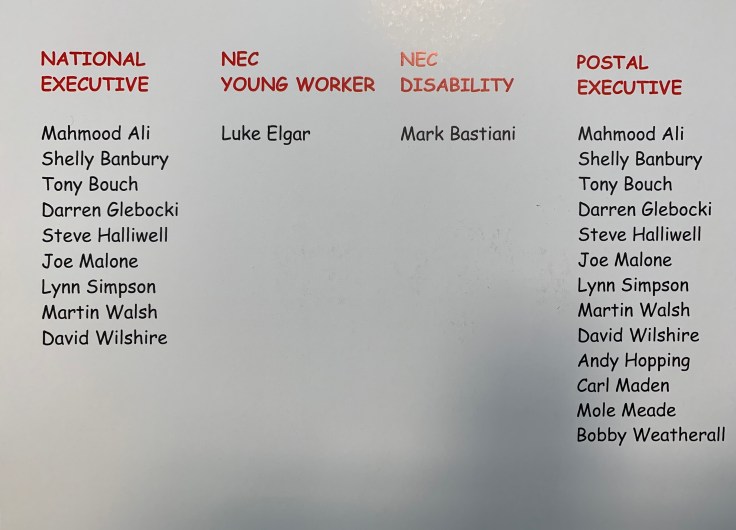
Further to LTB 348/19 dated 10th June 2019 at the close of nominations on the 2nd July 2019 the following were received:
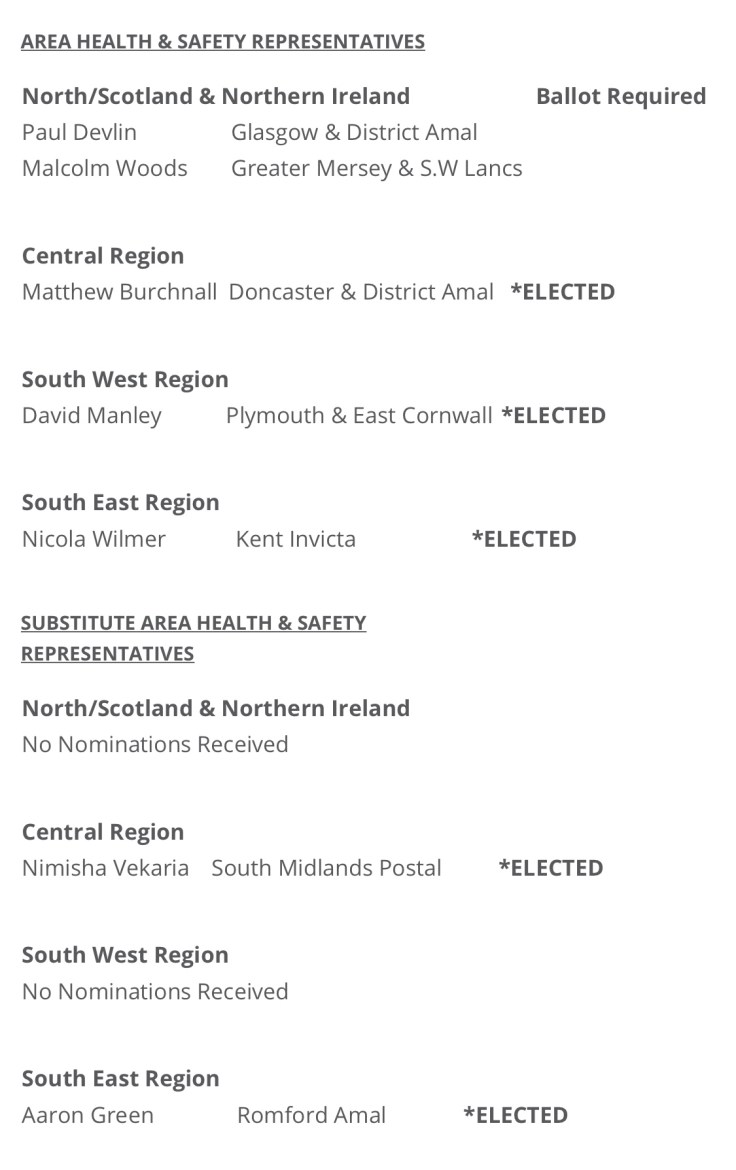
The arrangements for the ballot for the Area Health & Safety Representative in the North/Scotland and Northern Ireland Region are being drawn up and will be notified to the relevant branches in due course.
Any enquiries regarding this Letter to Branches should be addressed to the Senior Deputy General Secretary’s Department on telephone number 020 8971 7237, or email address sdgs@cwu.org.
Yours sincerely,
Tony Kearns
Senior Deputy General Secretary
NEC, Industrial Executive & Regional Secretary Elections 2019 – Dispatch of Ballot Papers
In accordance with respective election regulations the ballots papers for the above national and regional elections are due to be posted to members from 2nd July 2019.
The purpose of this LTB is to advise branches that we have received notification from ERS that the ballot papers will now be dispatched from 3rd July 2019. This is due to the high level of printing involved in the production of the election material.
A further LTB will be sent out once we have received notification from ERS that the dispatch of ballot papers has been completed.
I would also take this opportunity to advise that the method of posting is Economy Postage.
Election Count/Members Observer
Branches will be aware that it is the policy of the CWU to invite union members to observe the election count at the offices of ERS in London.
The count takes place on 24th July 2019 and accordingly we would ask that you publicise this to your members. Members wishing to apply must not hold an elected or appointed position in the CWU.
The two observers will receive two paid days off work, subsistence and expenses and a fee of £100 after tax.
If any members of your branch wish to apply then please ask them to forward their details to Tony Kearns, Senior Deputy General Secretary, CWU, 150 The Broadway, Wimbledon, London SW19 1RX (by no later than 12th July 2019) or email sdgs@cwu.org
Any enquiries regarding this Letter to Branches should be addressed to the Senior Deputy General Secretary’s Department on telephone number 020 8971 7237, or email address sdgs@cwu.org.
Yours sincerely,
Tony Kearns
Senior Deputy General Secretary





 CWU Eastern No5 Branch