RETIRED MEMBERS AGM REPORT & FEBRUARY NEWSLETTER 

RETIRED MEMBERS AGM REPORT & FEBRUARY NEWSLETTER 


Dear Colleagues

This report and newsletter reflects on what has happened in the past 12 months, and possibly what we have to look forward to in the coming months.

Firstly, my thanks must go to all who have supported me during the past months, right through from the Branch Officers and Committee, to the Retired Members who have assisted with the circulation of our newsletters. Also to all Retired Members who have given their input on how we can improve on Retired Membership and pensioner issues.

My personal thanks also to Dick Hewlett for his support and input, and finally, on behalf of the Branch, our best wishes to Pat Friskey and Mick Shill and thanks for all the hard work put in on our behalf.

The following items are for information, but will be open for debate and discussion at the Branch AGM on the 24th of February if you are coming.


BREXIT

Whatever personal preferences people made on Brexit, I don’t think it has portrayed democracy, politics or politicians in a very good light. I’ll leave it there, for as we speak, March the 29th has yet to arrive, and I suspect there are still many stop and start miles to go. Only then will we some idea of what the future holds.


UNIVERSAL PENSIONER BENEFITS

Although we are still in receipt of these benefits, there is pressure being brought to bear by some local authorities relating to the bus pass taking into account central government grants reducing year on year. We will continue the campaign to protect allthese benefits.


W.A.S.P.I.

Women against state pension inequality. This is a voluntary UK based organisation, working to achieve fair transitional state pension arrangements for women born in the 1950s, affected by the changes to the state pension laws.

There is an ongoing judicial review, but it is an issue we should support, and continue to support until its conclusion.


SOCIAL CARE FUNDING

This is a quotation from an NPC (National Pensioners Convention) circular.

‘The Unfairness of Social Care Funding’ ‘Everyone accepts that the social care system is in crisis, yet the government has delayed a Green Paper on the subject a staggering 6 times. Meanwhile, many older people and their families are struggling with a complicated and unfair means-tested system which treats them all differently’

As always, the argument will continue to be made around the ‘ageing population’ scenario, but as the quotation states, older people and their families are struggling with this issue. Perhaps there should be a call for an integrated NHS/Social care system to be introduced?


TV LICENSES FOR THE OVER 75s

This will still be a debatable subject until the conclusions of the BBC’s consultation exercise have been completed in February 2019. You can help as a Retired Member, or as a relative of an over 75 to enter the debate by going online to https://bbcconsultation.traverse.org.uk/  which will guide you to the questionnaire page giving you opportunity to have a say.

Or you can complete the enclosed letter, which details the arguments for the retention of the free license for the over 75’s, and then post it to your local MP.


HELPFUL ORGANISATIONS

Again there are many organisations that are a vital link to pensioners and highlight many of the problems being faced, such as avoiding scams, personal home security, how to access benefit claims for O.A.P’s, how we can tackle loneliness and many more. Age UK, the Salvation Army, and local Citizens Advice Bureaux’s has much of this information, and are well worth investigating. The CWU has information via their website on the Retired Members page, and also via the Retired Members supplementary issued with the Voice, this will include information on your pension, and how you can contact Union line for some legal advice.


CWU. NATIONAL. REGION. BRANCH

The Re-design conference last November has now concluded the financial and organisational framework for the Union which will be completed by way of the necessary rule changes which will be made at Annual Conference in April.


CWU/cont

Hopefully, the Eastern Region will endorse a proposed motion from the Regional Retired Members Committee to go forward to Annual Conference which will enable the Retired Members at the national level to be properly and equally represented at Region and National level.

At the Branch level, Chris Hunt has proposed two motions to go forward to Annual Conference, one which could allow the widow/widower/partner of a former Retired Member to retain a form of membership with the union which currently isn’t possible.  The second relates to a continuation of being a Retired Member without having to re-apply on retirement. Hopefully, both will be supported, butunfortunately, we cannot accept postal or proxy votes, you will have to attend the AGM if you would like to support them.


SUMMARY

Although we are Retired Members, we cannot vote tostrike on all of the problems in the outside world we face up to. What we can do is to continue to protest where and when we can in order to get our points across. I think we will have to strengthen our partnerships with the Labour party, the TUC and all other likeminded organisations sympathetic to OAP’s, so that we can be treated with dignity and respect, remembering the full working life financial investments we have made through our NI and Income Tax contributions.

We shall organising a future Retired Members meeting soon. Please do not hesitate to contact me through the Branch office if you think I can be of assistance.


Kind regards


Mick Goldsmith


Processing Report for 2019 Annual General Meeting’s

Processing Report for 2019

Annual General Meeting’s


General 

I would like to start this report by thanking those CWURepresentatives and Substitutes who have supported me and each other over the last year. I also thank those members of the CWU Eastern No5 Branch Committee for the supportthey have given me and last of all thanks go out to you our members who have patiently shown support and understanding in another testing year.

The Pay and Four Pillars Agreement (P&FPA) was in its infancy at last year’s AGM. A lot of time over the last 12months has been spent negotiating the many challenges that the agreement offered up, as well as all the normal day to day tasks that face the CWU Reps and members. 

An ever-growing aspect of the business, which we have reported on before, Is the change since privatisation on the business approach to our Royal Mail/CWU Joint National Agreements, which is putting increasing pressure on your CWU Representatives and you the members. It has become evident Managers are being directed to seek advice from HR Legal Advisors when dealing with the Attendance, Grievance, Conduct Code and Bullying and Harassment Procedures. Where pre-privatisation your Union Rep would represent you in front of your Manager and your Managerwould conduct the meetings making their own decisions on the circumstances set out before them. They are nowdirected to consult and adhere to the advice given by these advisors who offer advice purely from a legal point of view. This results in more issues of reviews in the Attendance Procedure and further than normal escalations of the Conduct Code and Bullying and Harassment Procedures,which the CWU feel is fundamentally wrong as this takes away the personal relationship between staff and Management which is against the spirit of our agreements.


Processing Re-alignment of Duty Structure

The year started with preliminary discussions around resourcing. We were originally approached by the Production Control Manager (PCM) with proposals torecruit twenty to thirty Anguard Casual conversions to new eight-hour Saturday only contracts. The reason being Saturday afternoon was under resourced because a lot ofthe original Saturday only staff were on temporary increases of contracts to either fulltime or mid-week parttime. Which meant we were using casual staff every week.

We were happy to agree on the proviso we would look at the whole processing duty structure in line with the resourcing re-alignment section of the P&FPA, with a view of guaranteeing permanent increases of contracts for all staff who were performing temporary contracts, increase duty work hours on all four shifts, reduce the reliance on casualsand high percentages of overtime, stop diverting work out to other mail centres and secure both the 1c and 2c operationsat Peterborough Mail Centre. 

This is something we had attempted to do several times over the last four years but had failed due to inconsistency of Plant Managers and Royal Mails privatisation with severebudget restrictions. However, the current Plant Manager Su Redshaw was determined to agree with the union a re-alignment of the duty structure which would see all  staff on temporary duties made permanent on the temporary hours they were performing, the introduction of new duties to resource against the Amazon growth and the introduction of the 1st hour towards the shorter working week for full-time staff from the P&FPA and secure our future workplace. The aim was to agree and implement by October 1st, 2018.

We agreed a re-aligned duty set with a minimum amount of disruption to the current working patterns of staff to present to the CWU Processing Shift Reps and Managers to point out people and content issues they identified and aligncurrent staff against the duties, most of whom were alignedagainst the duties they originally picked. The temporary contract staff were re-aligned to their permanent contract duties.

This was displayed to the members and we briefed staff in the Work Time Listening and Learning (WTL&L) sessionsalong with the agreed procedures we would use for the forthcoming pick exercise.

The first two rounds of picks were for processing staff only, whereas rounds three and four were open to staff from other functions under the roof. This resulted in significant increases in contractual hours for 118 people, 78 of which went part-time to fulltime, all staff on temporary increaseof hours contracts were successful in picking permanent duties reflecting their temporary hours, staff being able to change shifts to their preference and staff moving into processing from other functions. Of the 78 who moved up to full time, 35 had previously been on 20-hour contracts and 28 new full-time workers moved straight from eight-hour Saturday-only contracts, while another 27 eight-hour Saturday-only people picked 20-hour contracts.

Although the old processing scheduled attendances (SA)were cancelled when the new re-aligned duty structure came in on October 1st, it was agreed to continuing honouring the hours to the staff who held them until the new SA pick exercise had taken place and implemented. The reason for this was we knew a lot of staff would be able to change their shift and work patterns during the pick exercise and therefore deemed it unfair to do the SA pick at the same time as the duty pick. The new re-aligned SA pick was advertised and allocated during the Christmas pressure weeks and implemented in January 2019. There are several vacant SAs which were not picked. One of the reasons for this is the ceiling on how many SA hours a member of staff can hold in any one week, which is 12 hours, as per The Way Forward Agreement. The CWU are proposing to take a motion to this year’s Postal Conference to address this.

There will be a Post Implementation Review (PIR) of the re-alignment in February 2019 where meetings will be held with the Shift Reps and Managers to discuss how the re-alignment is working towards the Processing workplan with a view to address any issues raised.

Overall the exercise has been a huge success which hasearned the applause of the CWU Postal Executive.


Romec Cleaners Applying for Internally Advertised Mail Centre Duties

During the recent Processing re-alignment exercise jobs became vacant for staff from other functions to pick. Romec cleaners applied which raised issues which needed confirmation from CWU HQ. Confirmation came back stating Romec cleaners can only apply and be allocated a Royal Mail duty if they had previously applied and been successful in passing a Royal Mail aptitude test for an externally advertised Royal Mail job. There was not yet an opportunity for Romec staff to take an aptitude test when applying for an internally advertised job. Because of this some Romec cleaners were unsuccessful with their applications.

The CWU are proposing to take a motion to this year’sPostal Conference to address this.


Shorter Working Week (SWW)

The first hour was agreed when we Nationally agreed totrials on Automated Hours Data Capture (AHDC), PDA actuals and the Resource Scheduler. The PCM gave his first proposals on where the SWW should be, based on the information produced by the Resourse Scheduler this was put to the CWU Shift Reps and after negotiations andcounter proposals we agreed the first hour reduction to be implemented on October 1st with the realignment in line with the P&FPA. However, because of the reduction some members of staff attendances fell below 7 hours 1 min, which is the threshold of the 40+20-minute meal relief entitlement as outlined in The Way Forward Agreement. Royal Mail were quick to react and reduce those members meal relief entitlement by 10 minutes as per the agreement.

The CWU are proposing to take a motion to this year’sPostal Conference to address this. This is a challenge we will face again this year as the second hour reduction to the SWW is due to commence in October 2019.


Conduct and Attendance Procedure

In terms of conduct code cases we have had a number to deal with and had varied success. We live in testing times and Royal Mail seem evermore determined to handle cases with qualified Legal HR Advisers and most cases are raised to Second Line Managers, which is a dismissal level. On a plus side we only had one person dismissed under the attendance procedure and this was overturned on appeal.


Christmas 2018

The Christmas 2018 Agreement was a bone of contention as Royal Mail Top Management wanted to enforce a maximumlimit of 70 hours work per week with an 11 hour daily rest period and a 24 hour weekly rest period  for all four weeks of Christmas pressure in line with the European Working Time Directive (EWTD) totally undermining the last Nationally agreed resourcing for Christmas pressure found in Special Briefing 351/2001 which states:


1. Christmas 2001

We agreed that the hours limit would be 80-gross-hours for each of the two peak Christmas weeks, with a 9-hour break in each 24-hour period and no requirement for a weekly break. For the remaining two weeks, the limit will be 72-gross-hours with the daily break flowing through from the year-round position (10-hours if introduced by then, 9-hours if not). Again, with no mandatory requirement for a weekly 24-hour break.


As this was the last Nationally agreed statement on Christmas, we quickly entered the Industrial Relations Framework completing stages 1 & 2 locally before raising to stage 3. However, before the stage 3 could be heard,Royal Mail Top Management conceded and allowed the status quo to continue for this year as the disagreement was very near to the start of Christmas pressure and the CWU had threatened not to agree planned diversions in or out of the Mail Centre until we had a jointly signed Christmasagreement.

The CWU are proposing to take a motion to this year’sPostal Conference to address this in time for next year.


2018 Christmas Raffle

This year’s raffle for the long-term sick was another success raising £961.70. There were 37 prizes donated for the raffle by Union Reps, Managers and Members of Staff. I would like to say a big thank you to all the Reps who helped organise the event and sell raffle tickets and a big thank you to all the people who supported the raffle by buying tickets.


Parcel Sort Machine

At the beginning of 2018 we were told Peterborough Mail Centre (PMC) had been taken of the list of mail centres who were to have a parcel sort machine (PSM) installed.However, there were two machines which had not been allocated and PMC had been shortlisted along with Glasgow, Newcastle and Sheffield, as a possible centre to have one installed. In September, the eve before the first pick of the Processing duty re-alignment closed, we were informed PMC had been successful with our application for one of the remaining two machines. Installation will start in May 2019 with a view of an up and running date for October 2019. Joint Negotiations will commence shortly around staffing assumptions and the effect the machine will have on PMC.

Further updates will be reported as they become availablethroughout this year.


Nationally Agreed Trials

PMC will be a trial site for a re-usable bag tie and AGV’s which is essentially an automated (driverless) TUG consisting of four carts and multiple pick up and drop off points for York’s. Engineers have started to prepare for the trial by installing extra power lines in the Processing hall.

Further updates will be reported as they become availablethroughout this year.


Proposed Motions for CWU Postal Conference 2019


1) Since the introduction of the Shorter Working Week (SWW) agreed in the Nationally Agreed Pay and Four Pillars Agreement some duty days have been reduced to a less than 7 hours 1-minute attendance. Royal Mail have been quick to react to these changes by enforcing the entitled meal relief from The Way Forward Agreement. 

Therefore, a member who used to work a 8-hour attendance used to qualify for 1-hour break (40+20) whereas now a member working a 7-hour attendance qualifies for a 50-minute break (30+20) in effect reducing the SWW by 10 mins.

The Postal Executive is instructed to negotiate in any future pay deals a new meal relief structure which will not disadvantage our members when the length of attendance times is shortened by the introduction of the shorter working week.


2) Christmas pressure 2018 saw Royal Mail attempt to enforce the European Working Time Directive (EWTD) of a maximum weekly working limit of 70hours, an 11-hour daily rest break and 24-hour weekly break or 48-hours in two weeks. The last time a joint Nationally agreed document on Christmas was Special Briefing 351/2001 which states.

1. Christmas 2001

We agreed that the hours limit would be 80-gross-hours for each of the two peak Christmas weeks, with a 9-hour break in each 24-hour period and no requirement for a weekly break. For the remaining two weeks, the limit will be 72-gross-hours with the daily break flowing through from the year-round position (10-hours if introduced by then, 9-hours if not). Again, with no mandatory requirement for a weekly 24-hour break.

The Postal Executive is instructed to negotiate with Royal Mail in preparation for Christmas 2019 a new jointly agreed working time directive for the Christmas pressure weeks which will include, the hours limit would be 80-gross-hours for each of the two peak Christmas weeks, with an 11-hour daily rest break and no requirement for a weekly break. For the remaining two weeks, the limit will be 72-gross-hours with an 11-hour daily rest break and no requirement for a weekly break. 

This will be agreed and published in time for local negotiations for Christmas and New Year 2019


3) There is not an opportunity for Romec cleaners to apply for Royal Mail internally advertised Mail Centre duties unless the applicant has applied for an external Royal Mail position and been successful in passing an aptitude test.

The Postal Executive is instructed to negotiate with Royal Mail and Romec the opportunity for Romec staff to take an aptitude test when applying for internally advertised Royal Mail duties.


4) The Way Forward reads Scheduled Attendances will be limited to no more than 12 hours per employee in any week.

Scheduled Attendances can be introduced on a seasonal basis and therefore are sometimes difficult to resource against whilst a limit is in place. 

The Postal Executive is instructed to negotiate with Royal Mail the removal of a limit to how many Scheduled Attendance hours an employee can hold in any week providing they adhere to the European Working Time Directive.


EJ Orviss

Area Processing Representative

Area.processing@cwue5.org


Date 7th February 2019

CWU Calls for a Ban on Low-Level Letterboxes and for the UK to adopt the EU Standard: CWU Low-Level Letterbox Campaign Update:

CWU Calls for a Ban on Low-Level Letterboxes and for the UK to adopt the EU Standard: CWU Low-Level Letterbox Campaign Update:

As you know, 2018 Main and Postal Conference passed motions calling for the re-launch of the CWU Low-Level Letterbox Campaign and this has been done in a high profile way with the Campaign gaining widespread National, Regional and Local TV, Radio, Press and Social Media coverage.

The CWU position is that Low-Level Letterboxes should be banned to prevent postal workers straining their backs, injuring their hands, trapping fingers, risking musculoskeletal injuries and repetitive strains or being bitten by dogs at the base of the door – where the dog is!

In support of the Union’s campaign Vicky Ford MP proposed new legislation in a Private Members Bill last month with 12 MPs from various parties signing the Bill, and through CWU high profile lobbying in the House of Commons, hundreds of MPs from all political parties indicated support for the Bill and the CWU Campaign. This is a “key issue for postal workers.”

The Campaign is calling for it to be statutory that all new letterboxes being installed are to be at a height of between 70cm (2ft 3ins) and 170cm (5ft 6ins).

The Communication Workers Union is campaigning for new buildings to meet the EU letterbox height standard. We have made it clear that the CWU, which represents postmen and women, does not expect private households or businesses to change exiting doors, but for the measurements to become a new building regulation in the UK, and to cover new house builds, replacement doors and refurbishments as well.

The union first started asking the government to raise the level of letterboxes in 1958 and, while it was agreed by the British Standards Agency, it was never enshrined into building standards law neither was it transposed into UK law when the EU Standard was issued in 2000, mirroring the previous British Standard.

A similar campaign was run by our sister union in Ireland and that saw low-level letterboxes banned in 2001. Other EU states have similar statutory rules e.g. Belgium, Portugal and the Rep of Ireland and the CWU believes “the time has come to replicate this in the UK.”

There were 16,800 back-related spells of absence in Royal Mail last year involving injured postmen and women.

There are over 95,000 postmen and women, CWU grades, working out on the streets for Royal Mail daily.  They deliver to 30 million address, they serve each of our communities six days a week, every week of the year, and with 300,000 new homes being built annually the problem is growing.

Our Campaign and the Private Members Bill supporting it simply wants to stop developers from building swathes of homes each with a letterbox placed near to the ground and we are campaigning and confident of securing cross-party unity in the Houses of Parliament to secure our policy objective.

The Union’s Health, Safety & Environment Department is now lobbying Housing Minister Kit Malthouse to encompass the Letterbox Standard in the government’s Building Regulations Review later this year.

The CWU Health, Safety & Environment Department now has the full support of Royal Mail for our Campaign and we are planning a number of joint initiatives, through joint co-operation and support for the CWU ‘Low Level Letterbox Campaign’. A joint letter to all UK House Builders, registered at Companies House, asking that they comply with the EU Letterbox Standard and give an undertaking, is planned along with a House of Commons/House of Lords event, inviting all MPs and Lords to a ‘drop-in’ session, to talk about the Low Level Letterbox Campaign and sign up to support us.

The benefits of the Letterbox Minimum Height we are campaigning for include:

  • Reducing injuries to postmen and women– Royal Mail workers had over 16,800 back related absence spells in 2017/18 (a ‘spell’ could be any period of time e.g. a day or even a year).  Whilst not all of these will be as a result of delivering mail, the act of bending or stooping to deliver mail to low letterboxes is a significant factor.
  • Reducing the risk of trapped fingers which are more easily trapped in low level letterboxes.
  • Reducing the impact of dog attacks – low level letterboxes are also easier for dogs (or cats) to hide behind and bite or swipe at postmen and women delivering the mail.  2,275 recorded dog attacks took place on postmen and women across the UK in 2017/18 – 44 attacks per week.
  • Higher ‘first time delivery’ rates, meaning fewer damaged items, redeliveries or trips to pick up undelivered mail for customers.
  • EN13724 also sets out minimum sizes for letterbox apertures, so that standard size letters and smaller parcels can be delivered through the front door.  Many letterboxes simply cannot take a standard letter, let alone a large letter or small parcel/packet.
  • Ensuring developers use minimum standards will lead to fewer mail items being damaged – or not delivered first time – which brings benefits to customers.

We were delighted that Keepmoat Homes one of the UK’s top 20 builders recently changed their door choice policy when challenged by the CWU Health, Safety & Environment Department on their use of low level letterboxes on a large 250 homes development in Stoke. We are calling on all developers to follow this lead and commit to installing only doors with the letterbox between 700mm and 1700mm in compliance with the EU Standard and NHBC Guidance (copies attached).

We have the support of MPs and Local Authorities across the nation on this matter and seek your support also.

We have taken our case to the House of Commons and a Private Members Bill was recently passed. We hope that later this year the Housing Minister will enshrine the EU Standard EN13724 into revised UK Building Regulations. In the meantime, we hope to gain support for our campaign in pressing builders to comply with the EU Standard which wouldn’t have been created if it wasn’t necessary.

See attached:-

  • CWU Low Level Letterbox Campaign leaflet
  • CWU Low Level Letterbox Campaign Logo
  • EU Letterbox Height Standard EN13724
  • National House Builders Council Technical Guidance Newsletter (P6 Letterbox Heights)

Branches wishing to obtain copies of the leaflets and logo should contact the CWU/HQ Print
Room (Debbie Ackerman). Please share the leaflets with Local Councilors and Builders.

Thank you all very much for your support. Further reports will be made in due course.

Yours sincerely

Dave Joyce
National Health, Safety & Environment Officer

19LTB098 CWU Calls for a Ban on Low-Level Letterboxes and for the UK to adopt the EU Standard

European Regulation EN13724 for Post Boxes (2)

Low Level Letter Box Flier

Low level Letterboxes Logo

NHBCs Technical Newsletter Issue 34 – December 2005 (2)

The Importance of Workplace Fire Drills – RMG Fire Safety Week

The Importance of Workplace Fire Drills – RMG Fire Safety Week

To: All Branches with RM Members 

Dear Colleagues,

What is a fire drill and why are they necessary?

A fire drill is a simulated emergency procedure which aims to emulate the processes which would be undertaken in the event of a fire or other similar emergency. It involves creating a situation which replicates what would happen if a real fire were to occur, with the inclusion of fire alarms, and requires all employees, and anyone else who may be within the property at the time, e.g. visitors, customers, contractors to evacuate.

Fire drills are an important part of workplace fire safety procedures for many reasons. Preparation is the key to effective response to workplace fires. Fire drills help ensure that the workforce responds quickly, calmly and safely and that all staff, customers and visitors to the premises understand what they need to do if there is a fire. They also help to test how effective the fire evacuation plan is and are used to improve certain aspects of fire provisions. Along with fire alarms, fire exits, fire doors, fire extinguishers and fire safety signs, Fire Drills are an indirect, but equally significant, form of fire protection and aim to protect everyone who works within a Workplace building from the devastating consequences of fire.

As well as testing that the fire alarms are working, carrying out a full fire drill will help to check other equipment such as fire doors, which are used when a fire alarm sounds. Checking that Emergency Lighting works effectively can also be carried out during the fire drill. If there are problems or weaknesses discovered with the emergency evacuation plans then the Person in Control (PiC), along with the Management team, Safety, Health and Environment (SHE) Team, in consultation with Union Health and Safety Reps can work together to improve it. Additionally, immediate steps can be taken to rectify any problems with the building’s equipment, getting it fully checked out, repaired or replaced. If it’s found that Fire exits and routes are blocked, or too narrow for employees to quickly escape, remedial action can be taken.

Fire Drills can often be viewed as an inconvenience by Managers and the Workforce alike. Not only do they disrupt the day and distract from valuable working time, they can also be perceived as a nuisance to staff and are often greeted with distain so it’s important to communicate the value and reasons for Fire Drills and that, in a real life situation, not knowing what to do may be putting their lives in danger.

The intention is to make an evacuation in the event of a fire as simple, efficient and effective as possible, it involves running employees through the evacuation procedures, ensuring they are familiar with the plan and are able to get out quickly and safely. It is also intended to make sure relevant fire wardens know exactly what they are doing and can assist if their support is ever really needed.

Fire Drill Frequency

In Royal Mail Group there will be a minimum of one Fire Drill or (Fire Evacuation Practice) per year, per shift in each operational building.

If a Unit Manager, in consultation with the RMG SHE Team and Union Health and Safety Reps decides to carry out further Fire Drills, more frequently than above, for operational of risk assessment reasons within the Office, e.g. due to the number of staff, size of the building, diversity of operations, joint user sites or other complexities, this is acceptable to RMG.

Who is responsible for a fire drill and how often should be they undertaken?

According to Fire Safety Laws in the UK, the person responsible for all aspects of fire safety in commercial and non-domestic premises is the owner, occupier or manager. Legislation refers to this person as the responsible person’ (Person in Control – PiC) and, as such, they are in charge of ensuring all fire safety regulations, as required by law and enforced by local fire and rescue authorities, are fully complied with.

The PiC, as the responsible person’ has a number of duties, including planning for an emergency and providing staff with information, fire safety instruction and training. Therefore, they must make sure regular fire drills are carried out and conducted effectively, putting into place any remedial actions which must be taken as a result of the drill’s evaluation.

In order to fulfill the legal obligations, and in accordance with fire safety regulations, fire drills should be conducted at least once a year (more often in environments such as schools and nurseries and high risk workplaces) and the results should be recorded and kept as part of the fire safety and evacuation plan. Additionally, all new staff should be informed of the fire evacuation procedures as soon as they start work and if a new fire risk is ever noted or recognised all employees should be informed.

Regulatory Reform (Fire Safety) Order 2005

In the United Kingdom fire safety was covered by about seventy pieces of fire safety legislation, the principal ones being the Fire Precautions Act 1971 and the Fire Precautions (Workplace) Regulations 1997/1999. In 2001 it was therefore decided the legislation needed to be to simplified. This was achieved with:-

  • England and Wales – the Regulatory Reform (Fire Safety) Order 2005.
  • Scotland – the Fire Safety (Scotland) Regulations 2006.
  • Northern Ireland – the Fire Safety Regulations (Northern Ireland) were introduced in 2010.

[Note: The contents of this LTB have been agreed by the Royal Mail Group Property and Facilities Solutions National Fire Risk Manager]

Yours sincerely

Dave Joyce
National Health, Safety & Environment Office

Actual Hours Data Capture Equipment – Site Surveys 

Actual Hours Data Capture Equipment – Site Surveys 

Dear Colleagues,

Branches and representatives are informed that the Automated Hours Data Capture trial activity has concluded and is currently subject to review at National level, in line with the agreed Terms of Reference (LTB 295/18 refers).

We have however been informed by Royal Mail National Management that they may be undertaking a number of site surveys, in order to identify and establish where in future the equipment and kit associated with this project could be installed, and to understand the associated projected costs.

Royal Mail have stated that this is necessary in order to inform the future Business case if the decision is made to pursue deployment of this initiative. They are also stating that at this stage the Business case decision has not been made to deploy or roll out the use of AHDC equipment Nationally and therefore as such the site survey activity is purely a preparatory exercise.

From the CWU perspective we have made it absolutely clear to the company that the trial activity in relation to this initiative has not been fully and jointly reviewed and evaluated in line with the Nationally agreed Terms of Reference. Therefore any National rollout or deployment is subject to further National discussion and agreement prior to any deployment taking place.

Branches and representatives will of course be updated as developments occur. However, in the meantime you are requested to monitor the situation and ensure that should there be any managerial attempts to introduce AHDC that this is challenged via the IR Framework and the relevant department is notified immediately. 

Any enquires in relation to this LTB should be directed to:

Deliveries: Outdoor Department, reference 230.03, email address: outdoorsecretary@cwu.org.

Or

Processing & RDC’s: Davie Robertson, Assistant Secretary, email: dwyatt@cwu.org or shayman@cwu.org quoting reference number: 730.13.

Yours sincerely,


Mark Baulch – Assistant Secretary 

Katrina Quirke  – Acting Assistant Secretary 

LTB 096.19 – Actual Hours Data Capture Equipment – Site Surveys

Election of CWU Delegates to the TUC Equality Conferences – 2019

Election of CWU Delegates to the TUC Equality Conferences – 2019

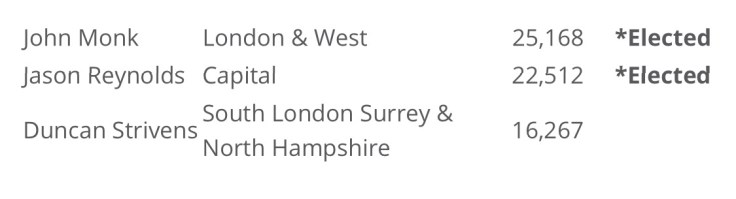
Further to LTB 036/19 dated 22nd January 2019, find detailed below the results of the ballots.

TUC BLACK WORKERS CONFERENCE

3 Lay Members 


TUC DISABLED WORKERS CONFERENCE

Postal

3 Lay Members 


TUC LGBT CONFERENCE


Telecoms & Financial Services


2 Lay Members 


The branch analysis for the above elections are attached to this LTB.

Any enquiries regarding this Letter to Branches should be addressed to the Senior Deputy General Secretary’s Department on telephone number 020 8971 7237, or email address sdgs@cwu.org.

Yours sincerely,


Tony Kearns

Senior Deputy General Secretary

Ballot Result LTB

Ballot Returns Postal

Ballot Returns TFS


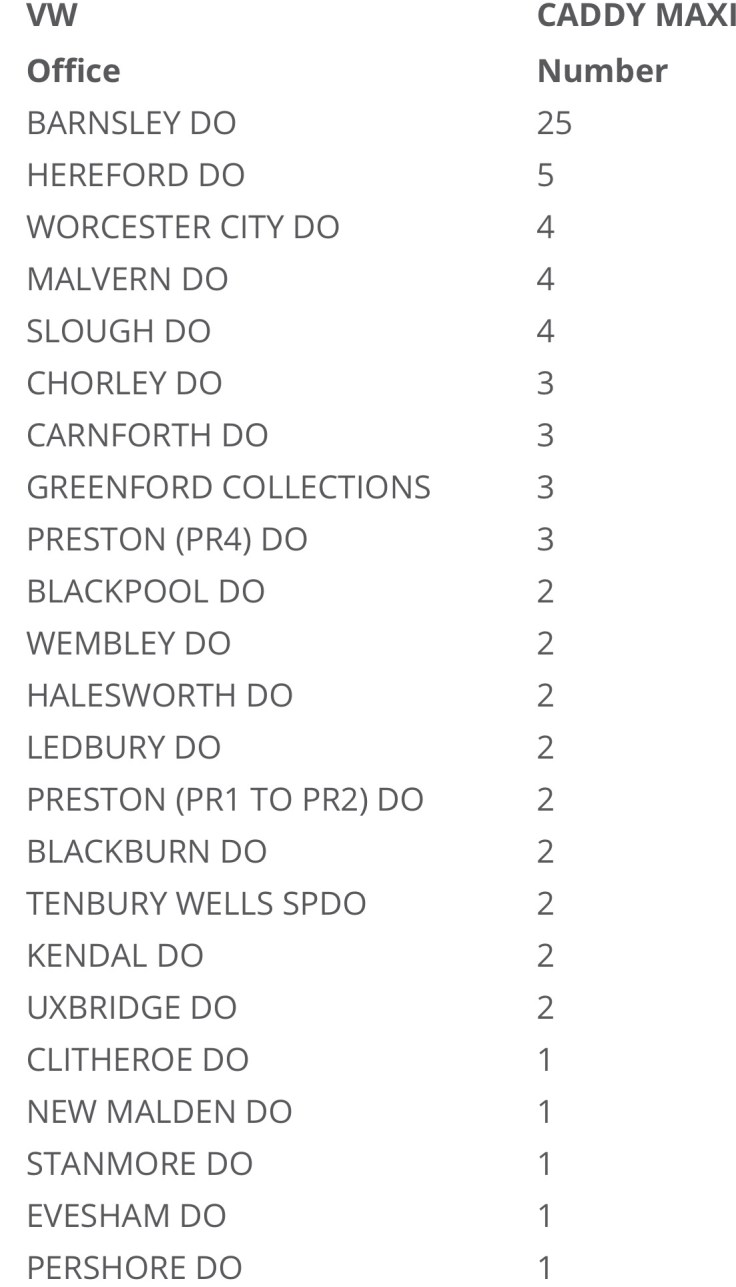
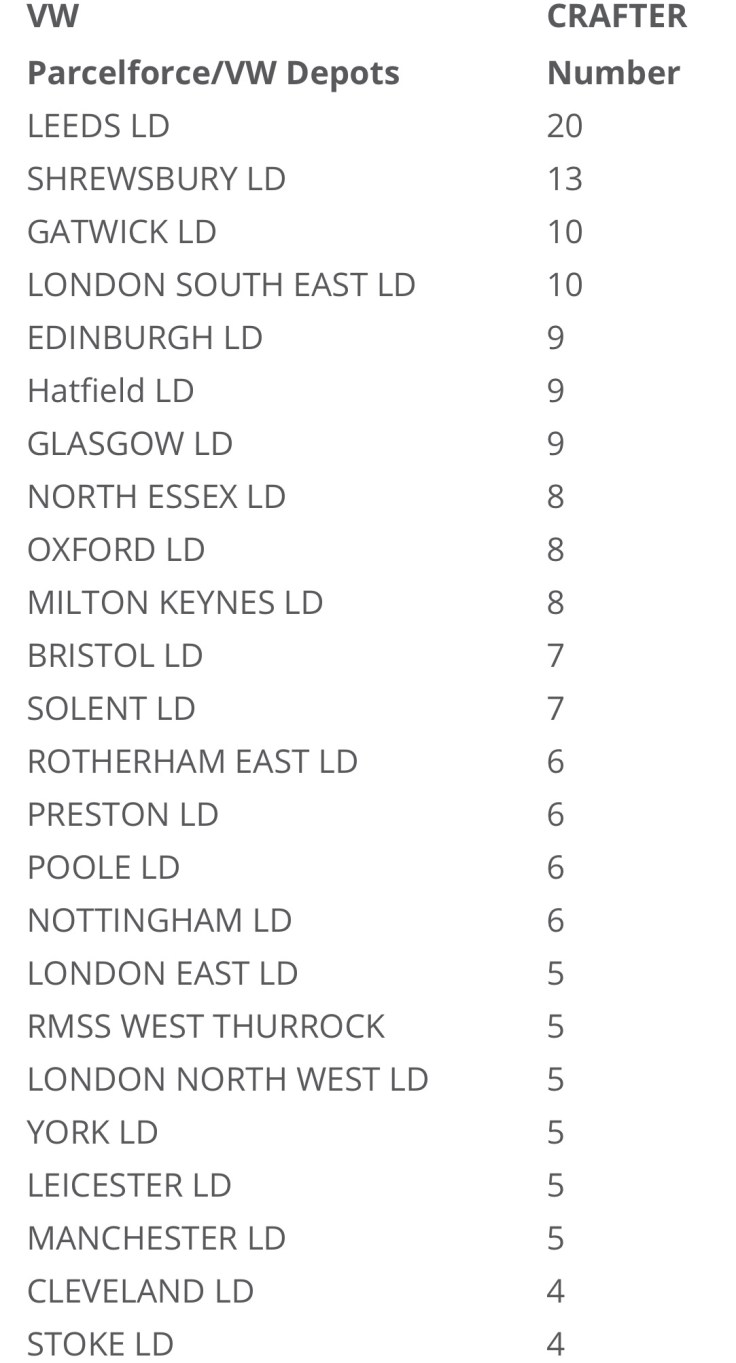
Royal Mail & Parcelforce Fleet New Volkswagen (VW) Caddy Maxi and Crafter Vehicles – Autonomous Emergency Braking System (AEBS) & City Emergency Braking System

Royal Mail & Parcelforce Fleet New Volkswagen (VW) Caddy Maxi and Crafter Vehicles – Autonomous Emergency Braking System (AEBS) & City Emergency Braking System

Royal Mail Fleet have informed the Health, Safety & Environment Department that New Royal Mail and Parcelforce Volkswagen (VW) fleet vehicles being introduced in to Royal Mail service will be fitted with new safety braking system features by way of collision avoidance technology, safety systems as described below.

Volkswagen (VW) Commercial Vehicles are the first van manufacturer to fit Autonomous Emergency Braking Systems as standard, which have been shown to cut rear-end crashes.

Depending on speed and situation, the VW Autonomous Emergency Braking System (AEBS) and City Emergency Braking can reduce accident severity at higher speeds and even avoid a crash at lower speeds.  

The AEBS consists of two elements. Front assist and City Emergency braking. Front assist (autonomous), which warns the driver of imminent collisions up to speeds of 130mph (VW Caddy Maxi) and 99mph (VW Crafter) and will assist the driver in braking when a collision is imminent. The City Emergency Braking (autonomous) works in tandem with Front Assist and operates up to speeds of 18mph, initiating an emergency brake if a collision is detected.

Using radar built into the front end of the van, the system uses a laser sensor to detect critical distances to the vehicle in front and the risk of an impending collision. If the driver does not brake and a collision is imminent then the system primes and applies the brakes automatically, to ensure that the speed of any collision is reduced.

Three quarters of collisions occur in so-called city environments (at under 25 mph) and a study by Euro NCAP (New Car Assessment Programme) showed autonomous braking leads to a

38 per cent reduction in real-world rear-end crashes. The City Emergency Braking system is an innovative collision avoiding technology designed to address these low speed city environment collisions.

Safe & Well – January 2019

Safe & Well – January 2019

Dear Colleagues,

Please see January’s edition of Safe and Well newsletter with contributions from our USRs and field teams. The newsletter will be running a reminder of “value of the USRs to your team” piece next month if there is anything you’d like to include in this or any newsletter just let Steve Mann know at smann@cwu.org.

Yours sincerely


Dave Joyce
National Health, Safety & Environment Officer

19LTB091 Safe & Well – January 2019

Safe and Well Issue 66 January 201

POST OFFICE: BODY WORN CAMERAS – SUPPLY CHAIN

POST OFFICE: BODY WORN CAMERAS – SUPPLY CHAIN

I wish to advise Branches and members working in Supply Chain that following a successful trial of 6 Body Worn Cameras (BWCs) in our Manchester Supply Chain Depot, and subsequently in Chester, Birmingham and Hemel, we concluded a National Agreement for the roll-out of a further 112 of these devices for use in Depots/Areas that are deemed to be high risk.

The roll-out of body worn cameras will take place on a phased basis, with the aim of starting this month. Crucially our members will be fully trained on the use of the BWCs prior to the roll-out which will cover 10 depots, based on the considered risk in the areas in which they operate. At this stage that will be Belfast, Birmingham, Bristol, Chester, Glasgow, Hemel, Manchester, London, Newcastle and Sheffield. The deployment will remain under review and we will jointly consider making body worn cameras available within other depots should the level of risk change. Members will be supplied with lightweight vests as part of their uniform to enable the fastening and wearing of the cameras.

Attached to this LTB is a Joint Statement published today and also the National Agreement which has been unanimously endorsed by the Postal Executive. The Agreement makes it clear the purpose and joint aims of introducing this initiative is “to improve crewmember safety and reduce the risk of criminal robberies.” 

In broad terms, BWCs will provide our crewmembers with protection, particularly in the event of suspicious activity whilst assisting in the prevention and detection of crime and to act as a visual deterrent to criminals.

Our members have full control of the BWCs and are able to determine when to use the record function, which will primarily be during the higher risk transfer points (cross-pavement). Essentially our members, at any point where they may feel under threat or vulnerable, can activate the record function, including where suspicious circumstances are suspected.

Crucially, the Agreement confirms that BWCs:

 “will not be used as an employee surveillance system” 

 “Individuals have a right to privacy at work” 

 “Access to the data on the camera shall be restricted to the  purposes of uploading to Grapevine and images on the camera will not be viewed in the depot”. 

The above extracts from the National Agreement provide our members with the necessary assurances and safeguards.

We have agreed that a Joint Review will take place 6 months after the deployment of the 112 devices (BWCs) have been in use. This is necessary as it is important to get feedback on the effectiveness of this equipment and in particular how our members feel about wearing them and having to activate them. I am though confident this initiative is of overall benefit to our members, particularly with the safeguards outlined above.

We also intend to carefully monitor the situation to determine whether the BWCs should be extended further beyond the 112 devices the Agreement allows for. In this regard, we will clearly seek the views of our Unit Reps to inform any representations made.

Finally, I would like to thank our two Supply Chain Representatives, Dave Bowmaker and Rob Jones, who have provided their support and assistance during this process and in the drawing up of the National Agreement.

Further developments will be reported.

Yours sincerely


Andy Furey

Assistant Secretary

19LTB090 Post Office – Body Worn Cameras – Supply Chain

Attachment 1 to 19LTB090 – Joint Statement

Attachment 2 to 19LTB090 – National Agreement

AGREEMENT BETWEEN PARCELFORCE WORLDWIDE AND THE CWU ON THE NATIONAL DEPLOYMENT OF A REVISED PERTEMPS POST RTA TRAINING INTERVENTION

AGREEMENT BETWEEN PARCELFORCE WORLDWIDE AND THE CWU ON THE NATIONAL DEPLOYMENT OF A REVISED PERTEMPS POST RTA TRAINING INTERVENTION

Branches and representatives are informed that trial activity has been taking place under our agreed Table of Success approach at a number of Parcelforce Worldwide Depots since October 2016 in relation to post intervention training interventions. Colleagues will be aware that under the 2014 agreed RTA Procedure one of the current post RTA interventions is a 4hr Pertemps training/assessment, the driver training supplier to RMG.

The trial activity, which was overseen by the Transport Working Group, reviewed the existing post RTA course, which was made up of 1 hour classroom and 3 hours driving with a view of achieving the following:

 Creating a real world intervention for the driver 

 Better utilization of the trainer/assessor time 

 To allow for more varied on the road coaching activities 

 To ensure the instructor has a better understanding of the job role under realistic conditions 

 Training that can be tailored to suit the individual driver to achieve and demonstrate the expected appropriate behaviours 

Overriding all trial activity was the key principles of “keeping drivers driving”, as contained in the 2014 Joint Agreement on the Road Traffic Accident Procedure’

Trial activity has now concluded with positive feedback from drivers being received and recommendation from the JWG that the revised training would be beneficial.

Discussions have therefore taken place at National level and an agreement has been concluded and endorsed by the Postal Executive which will enable the revised process to be deployed Nationally. A copy of the agreement is attached for your information.

Branches and representatives will note that prior to any deployment a joint presentation will be provided to Regional Organisers, local representatives and managers to ensure that the agreement and revised process is fully understood.

The agreement also confirms that the process is to be used as a corrective and not punitive intervention, when required.

Any enquiries in relation to this LTB should be addressed to Davie Robertson, Assistant Secretary, email: dwyatt@cwu.org or shayman@cwu.org quoting reference 102.08

Yours sincerely,


Davie Robertson

Assistant Secretary

LTB 088-19 – PFW Pertemps Post RTA Training – 07.02.19

Agreement on the Deployment of a Revised Pertemps Post RTA Training Intervention

Create a website or blog at WordPress.com

Up ↑