RE: ROYAL MAIL RE INTRODUCTION OF VAN SHARE POLICY – SICK PAY WHILST VOLUNTARY VAN SHARING

RE: ROYAL MAIL RE INTRODUCTION OF VAN SHARE POLICY – SICK PAY WHILST VOLUNTARY VAN SHARING

Further to LTB 489/20 dated 6th October 2020 in relation to the above and due to a

number of enquiries into both departments, the purpose of this Letter to Branches is to

inform members of the current situation with regard to sick pay whilst carrying out van

sharing.

As Branches and members will know, Royal Mail has taken the decision to arbitrarily

reintroduce van sharing on a voluntary basis for individuals from Monday of this week.

Whilst fully recognising the operational difficulties the single person only vehicle policy

has led to since its introduction during the National Lockdown period, it has without

doubt played a significant part in ensuring our member’s safety. Therefore, as the

number of confirmed Covid-19 cases along with the numbers of local & regional

lockdowns currently increases right throughout the UK, the CWU were not and are not

in a position to agree to or support the change to the previous single vehicle policy, as

it is simply the wrong time. In our view this could potentially increase the risk to

members of exposure to the virus.

Information issued by Government today included the following advice “It is difficult to

socially distance during car journeys. You should avoid sharing a car with someone from

outside your household or your support bubble unless you can practice social

distancing.”

Having heard directly from the company that they were reintroducing van sharing, albeit

on a voluntary basis, at a meeting on Friday 9th October 2020, we requested from senior

Royal Mail management that they commit to paying full sick pay to any member who

volunteers to van share, in the event they have to self-isolate. Despite the meeting

being attended by 5 directors / senior managers, they would not give the commitment

and guarantee we sought. We have asked Royal Mail to publish a communication stating

full sick pay will be paid in the circumstances where a member who volunteers to van

share has to self-isolate and also clearly stipulate any circumstances where sick pay will

not be paid.

This is important as a few weeks ago, Royal Mail sent a communication to their

managers which included the following “… We know most of our people continue to

follow the guidelines and behave in a responsible way. This is why Royal Mail

has adopted a supportive approach for employees who are required to selfisolate

due to Covid-19 by applying our normal sick pay policy. In most cases

this provides support above the statutory sick pay recommended by

government.

However, providing enhanced sick pay is dependent on the absence not being

caused by or aggravated by the employee. Where, in the reasonable view of

the company, there is evidence of an employee’s disregard for public health

guidance which then leads to them needing to self-isolate, Royal Mail Sick Pay

will not be paid….”

Clearly we want to ensure, despite our advice to the contrary, any individual who does

volunteer to van share will not fall into the category of “being caused or aggravated

by”, which is why we have requested Royal Mail make it clear full sick pay will be paid

and to be also clear, just as importantly, when sick pay will not be paid. This will allow

individuals to make an informed decision as to whether they want to van share or not.

At the meeting last Friday, we were informed we will have confirmation and the

communication will be published by Monday 12th October 2020. Neither has happened,

therefore we wanted to let you know the latest position and we will be writing to Royal

Mail calling on them to issue a communication stating full sick pay will be paid to anyone

who volunteers to van share, plus any absence of self isolation will not count towards

the attendance agreement.

We will also be requesting extra measures are put in place to ensure Fleet members

are also protected and ensure measures are put in place for you to enforce your legal

right to see and read the safe systems of work and risk assessment to ensure you fully

understand what you need to do, and what PPE you should be wearing should you agree

to van share.

Although feedback from branches is showing that volunteer numbers overall are low,

for absolute clarity our advice remains that members should not volunteer to van share,

as we believe given the current situation with the crisis that this is the wrong time to

go back to sharing vehicles. This advice does not change, even if we were to receive

the assurances as above in relation to sick pay at this current moment in time.

We will be writing to Royal Mail and will keep you updated on any progress.

All enquiries regarding the content of this LTB should be addressed to the PTCS

Department, quoting reference 401. Email address: khay@cwu.org and Outdoor

Department quoting reference 600. Email address: outdoorsecretary@cwu.org.

Yours sincerely,

Carl Maden – Acting Assistant Secretary

Mark Baulch – Assistant Secretary

20LTB501

House of Commons Transport Select Committee Road Safety Report – ‘Driving While Usinga Mobile Phone’ Published:

House of Commons Transport Select Committee Road Safety Report – ‘Driving While Using
a Mobile Phone’ Published:

In March 2019 the House of Commons Transport Select Committee of MPs launched an inquiry into road safety, looking at the Government’s current approach and considering what interventions would be most effective at reducing the number and severity of road traffic collisions in the UK. During the inquiry, the issue of driving while using a mobile phone was highlighted as a major area of concern. The Committee therefore focused part of its wider inquiry on the specific issue of road safety and mobile phones.

The Committee’s inquiry considered:-

  • Use of mobile phones by drivers and the risks this poses.
  • The adequacy of legislation relating to mobile phone use by motorists.
  • How enforcement and education around mobile phone use can be improved.

Key facts and statistics are:-

  • Driving while using a mobile phone impairs the ability to drive safely and increases the risk of a collision.
  • Using a hand-held mobile phone or other device while driving has been illegal since 2003, but the practice is still widespread and can have catastrophic consequences.
  • In 2017 there were 773 casualties, including 43 fatalities and 135 serious injuries, in road traffic collisions where a driver using a mobile phone was a contributory factor in the crash.

The Select Committee identified three key areas where the Government needed to take action:-

  • How the offence is defined in law and the penalties associated with it;
  • How the offence can be better enforced; and
  • How the public can be made aware of the risks and consequences of driving while using a mobile phone.

The central messages from the inquiry were that:-

  • If an offence is to be effective, it has to be well-defined and publicised so that motorists know what is and is not against the law.
  • Drivers need to understand the serious safety risk that driving while using a mobile phone poses to them and others.
  • The offence must be backed up with a high enough penalty for motorists to take it seriously.
  • There must be a serious prospect of offenders being caught.

Conclusions and Recommendations Summary:

The risks of using a mobile phone

Using a mobile phone or other device while driving impairs a person’s ability to drive safely and makes a road traffic collision more likely. This is true whether a device is hand-held or being used hands-free. The Government plans to publish an analysis of mobile phone use while driving, in order to help it decide what more needs to be done to tackle this activity. (Paragraph 13).

Legislative reform

The legislation defining the offence of using a hand-held mobile phone or other device while driving was drafted in 2003 and excludes activities that are known to create precisely the same risks as those covered by the legislation. The Committee recommend that the Government redefine the offence of driving while using a mobile phone or other device so that it covers all hand-held usage, irrespective of whether this involves sending or receiving data, whether for a communicative purpose or not as it’s just as dangerous, and it therefore does not make sense for legislation to distinguish between these things. (Paragraph 18).

The law currently only proscribes using a hand-held mobile phone or other device while driving. A hands-free device can be used lawfully, creating the misleading impression that hands-free use is safe. The evidence shows that using a hands-free device creates the same risks of a collision as using a hand-held device, and it is therefore inappropriate for the law to condone it by omission. The Committee recommend that the Government explore options for extending the ban on driving while using a hand-held mobile phone or other device to hands-free devices. (Paragraph 19).

Increasing the penalties for driving while using a mobile phone in 2017 appears to have changed behaviour in the short-term, but there is already evidence that bad habits are creeping back in. The Committee recommend that the Government should review the current penalties that apply to this offence and consider whether they should be increased to better reflect the serious risks created by drivers committing this offence and make clear to offenders that there are serious consequences to being caught. (Paragraph 22).

Enforcement

If motorists do not believe there will be consequences from breaking the law then many of them will continue to do so. Enforcing the law is essential to ensuring that motorists do not illegally use their mobile phone while driving. There must be a credible threat of offenders being caught. It is concerning that the number of offences resulting in Fixed Penalty Notices, driver retraining or court action have fallen by more than two thirds since 2011, while the number of people killed or seriously injured in collisions where mobile phone use is a factor in the collision has risen. The Committee recommend that the Government engage with Police forces and Police and Crime Commissioners to explore options for improving the enforcement of this offence including the use of technology alongside public awareness campaigns. (Paragraph 28).

Public Awareness

If using a mobile phone while driving is to become as socially unacceptable as drink driving, there needs to be a step change in the Government’s approach to public education. The Committee recommend that the Government set out a plan for devising and implementing a public education campaign about the risks of using a mobile phone while driving, and the penalties for being caught doing so. (Paragraph 34).

Government and public sector drivers

As well as setting policy and enacting legislation the Government can lead by example and encourage behaviour change across the public sector and Government supply chain. The Committee recommend that the Government demonstrate its recognition of the risks of using a mobile phone while driving whether hand-held or hands-free by producing guidance on the dangers of driving while using a mobile phone and instructing drivers directly in its employ not to use a mobile phone or other device whether hand-held or hands-free while driving, and explore the possibility of making this a requirement for the wider public sector and Government contractors. (Paragraph 37).

The Select Committee’s Report sets out its findings and recommendations in the above areas, for consideration by Ministers. A copy is attached for the information of Branches, Regions and Health and Safety Representatives.

Yours sincerely

Dave Joyce
National Health, Safety & Environment Officer

19LTB501 House of Commons Transport Select Committee Road Safety Report – ‘Driving While Using a Mobile Phone’ Published

HoC Transport Select Committee Report – Road Safety Driving Whilst Using.._

Post Office Ltd (POL) – 2020 ‘Free’ Flu Inoculation Voucher Scheme Offer To All Staff – Joint Campaign:

Post Office Ltd (POL) – 2020 ‘Free’ Flu Inoculation Voucher Scheme Offer To All Staff – Joint Campaign:

The Health, Safety & Environment Department at CWU headquarters has today received the finalised arrangements from Post Office Ltd, for their 2020 ‘Free’ Flu Inoculation (Flu Jab) Voucher Scheme offer to all POL staff and as in the past two years, it has been agreed that there will again be a joint campaign promoted by POL and CWU to encourage all POL members to accept and take up the offer.

The flu can be a painful viral infection for those infected. The UK public health authorities and the NHS estimate that the flu kills on average around 15,000 people across the UK annually. Anyone can catch the flu and spread it to others. Getting a flu jab is the best way to protect yourself, your family and your work colleagues.

The CWU is encouraging members to utilise the ‘POL Flu Jab offer’ which is now available to them ‘free of charge’ and can be obtained from leading high street pharmacies via an on-line voucher scheme this year. We therefore want to ask all our POL CWU reps to circulate this LTB to reinforce the message and remind all members how important a vaccination is this year, encouraging them to take up the offer, whilst also checking if they meet the criteria for a vaccination through the NHS.

POL’s initial plan for 2020 was to issue paper flu vouchers again, as in past years, however, due to concerns about availability of paper vouchers this year, POL has decided to switch to an ‘online voucher scheme’ for 2020. Some technical problems accessing the pharmacy booking page have slightly delayed the announcement but POL have informed CWU headquarters that the problems were resolved last Friday.

This scheme will enable all POL members to obtain a voucher and to book an appointment on line and then get a ‘Free of Charge Flu Jab’ at a high street pharmacy including Lloyds, major supermarkets and a number of independent pharmacies. The online scheme has been extended by POL and vouchers will now be available and redeemable until March 2021, rather than the original date of 31 December 2020.

POL Flu Jab Scheme briefings and communications have been sent out to admin and field teams, DMBs and Supply Chain. POL headquarters is asking managers to discuss the ‘Free Flu Jab’ scheme with their teams and obtain names and email addresses for the Health and Safety Team who are pulling together the programme with Optima Health. They will check again later this month to ensure that anyone who changes their mind or has been missed will have their details added to the list and will receive the online voucher code.

The POL ‘Free Flu Jab’ scheme has become very popular over recent years and last year there was a circa 60% take up by those members not normally eligible through the NHS.

In POL Supply Chain, larger populated sites will be visited by a nurse who will provide the vaccination to members on site. Dates are being provided to managers to share with members and posters will be displayed on noticeboards inviting members to book an appointment on a designated date.  Any members who are unable to book an appointment with the nurse will be offered the opportunity to request an online voucher. An email address will be requested so that a company voucher code can be sent with instructions on how to obtain a vaccine at a range of high street pharmacies.

For DMBs, branch managers have been asking members if they would like an online voucher for a flu vaccination. Members have also been asked to initially check whether they meet the criteria for a flu vaccination from the local NHS. If not, then DMB members can inform the branch manager that they would like to request a voucher from the POL Health and Safety Team. Branch managers have been asked to provide names with email addresses to the Health and Safety Team as soon as possible. A POL voucher code will be sent to e-mail addresses with a link to instructions on how to obtain the flu jab voucher.

The NHS Flu Vaccination Programme is being expanded throughout the UK this year, increasing the availability to additional groups of vulnerable people amongst the UK population in order to help protect vulnerable people and reduce the risks to people during the ongoing Coronavirus/COVID-19 pandemic. Members should therefore check with their GP surgery if they are eligible for an NHS free vaccination from their local NHS clinic, local pharmacy or GP surgery. The links below provide details from each of the UK’s government health minister’s plans to expand the NHS flu vaccination programme this year.

Those members wishing to take up the offer, which we strongly recommend, should request a voucher from the Health and Safety Team by completing and submitting the online form as soon as possible. A POL voucher code will then be sent to the individual’s Post Office e-mail address with a link to instructions on how to obtain the flu jab vaccine. The Link is:- https://forms.office.com/Pages/ResponsePage.aspx?id=sks8ayZvr0WXs_3tKnpg-WBCzbVjOz9Hiij9ARkkOXZUMENYVVhORTVaR01HSEZXWkw1WEROMkZFTC4u

Further information can be obtained from: HealthandSafetyTeam@postoffice.co.uk

Any management enquiries should be directed to Martin Hopcroft Post Office Ltd Head of Health & Safety Email: martin.hopcroft@postoffice.co.uk

The attached poster/flyer is also being circulated within POL.

Yours sincerely

Dave Joyce
National Health, Safety & Environment Officer

20LTB500 Post Office Ltd (POL) – 2020 ‘Free’ Flu Inoculation Voucher Scheme Offer To All Staff – Joint Campaign

UK_FLU_0419_0073-GP-Flu_Awareness_Leaflet

ALUN OWEN – TRAGIC DEATH OF AN OPENREACH ENGINEER

ALUN OWEN – TRAGIC DEATH OF AN OPENREACH ENGINEER

I am writing to advise Branches of the sad news that Alun Owen an Openreach Engineer and member of the CWU in North Wales tragically lost his life whilst at work on Tuesday 6 October 2020.  Our thoughts are with Alun’s family, friends and workmates at this difficult time.

It is believed that Alun fell into the river near Abergwyngregyn and the Police are investigating the circumstances surrounding the incident.  The Union will do everything possible to help Alun’s family.

When further information becomes available we will update Branches.

Any enquiries from Branches regarding this LTB should be referred to my office in the first instance.

Yours sincerely

Dave Jukes
Assistant Secretary

LTB 499.2020

Royal Mail Group – Latest Updated Coronavirus/Covid-19 – Frequently Asked Questions and Answers Guidance Document (Version 60)

Royal Mail Group – Latest Updated Coronavirus/Covid-19 – Frequently Asked Questions and Answers Guidance Document (Version 60)

I attach for your information Version 60 of the Royal Mail Group, Managers’ Coronavirus/Covid-19 Frequently Asked Questions and Answers Guidance document, issued by the business on 6 October 2020.

At the commencement of the Coronavirus/Covid-19 outbreak, Royal Mail Group established a ‘Business Pandemic Team’ which includes all national heads of department and this team meets regularly to review the situation across Royal Mail Group and to issue update Questions and Answers information communications to all managers, which is cascaded throughout the business.

The Coronavirus Guidance, version 60 Q&A document has been shared with the Union’s Health, Safety & Environment Department and is hereby circulated for information and reference purposes for CWU Health and Safety and Branch IR Reps.

The Q&A documents are circulated to all RMG managers and are also available to access through a link on the Royal Mail Group ‘Intranet’, in the ‘Managers Update Messages’ section.

Please note that changes and additions from the last version, number 59, are highlighted in ‘Yellow’.

Please also note that these Q & A documents are ‘Royal Mail Group’ documents and the contents are not agreed with the CWU. On page 4 reference is made to Royal Mail’s decision to re-introduce ‘Shared Vans’ on a voluntary basis, subject to identified exclusions. This has not been agreed with the CWU and the Union remains opposed to such a policy change at this present time. Please refer to LTB 489/20.

The Health, Safety & Environment Department continues in dialogue with the Royal Mail Group Safety Health & Environment Team to raise additions and amendments to the Q&A document.

Any enquiries to this LTB or feedback on the RMG Q&A document should be directed to Dave Joyce CWU National Health, Safety & Environment Officer.

Attachment:

Coronavirus Guidance Questions and Answers v60

Yours sincerely

Dave Joyce
National Health, Safety & Environment Officer

20LTB498 Royal Mail Group – Latest Updated Coronavirus Covid-19 – Frequently Asked Questions and Answers Guidance Document (Version 60)

Coronavirus Guidance Questions and Answers v60

Royal Mail and CWU National Guidelines/Checklist – Delivery Internal Logistics (Floor Plans)

Royal Mail and CWU National Guidelines/Checklist – Delivery Internal Logistics (Floor Plans)

At the beginning of the year that Outdoor Department started to see an increase in the number of enquiries from Branches regarding the frame configuration referred to by Royal Mail as ‘Base and Six’. This is where two walks share the same RM2000 fitting and is a frame layout which in fact has been in limited use within some DOs for the past number of years. Consequently, the department issued a memo to Divisional Reps and ADRs on the ‘Base and 6 Frame Configuration’ on the 3rd of March 2020.However, in recent weeks the number of enquiries into the Department has sharply increased during the COVID-19 pandemic and it became clear that Royal Mail were pursuing a proactive programme to deploy new frame and floor layout configurations, mainly centred around Base and 6 in a number of sites under a wider heading of ‘Delivery Internal Logistics’.

As a result of this, direct representations were made on this matter to Royal Mail and the company confirmed that due to the extraordinary increase in parcel volumes (circa 25% to 35%) and falling letter volumes (circa 15% to 35%) in recent months, that there was a pressing need in many Delivery Units to review and change indoor floor plan layouts to assist with the changing mail profile.

Equally, it was becoming clear from many of the enquiries received from Branches that in a number of sites the position being taken by Royal Mail was that frame/floor plan layout changes were non-negotiable and that such frame/floor plan changes would have a direct impact on current duty arrangements. In some sites, local management had sought to simply serve notice on the intention to impose frame/floor plan layout changes.

Whilst noting our wider concerns and representation made to Royal Mail at the way in which some local managers have approached this subject matter, it was however very clear that the change in mail profile and the growth in parcel workload during the COVID-19 pandemic, have caused real challenges for many Delivery Offices in relation to space and storage issues and solutions. It is equally clear that this particular growth in parcel workload, supported by Royal Mail’s own traffic forecast indications, will remain an everyday feature for the foreseeable future with significant parcel growth envisaged along with the increasing volumetric of items. As such, local plans and proposals from Royal Mail to review DOs frame and floor layout configurations and indeed a genuine need at local level, to review current floor plans against this changed mail mix, will not go away or abate.

Against this backdrop, the department entered into talks with Royal Mail in order to restore balance to this subject and these discussions have now concluded with an agreement on the attached Royal Mail and CWU

National Guidelines/Checklist – Delivery Internal Logistics (Floor Plans), which have been endorsed by the Postal Executive.
These National Guidelines/Checklist and accompanying documentation are designed to provide a clear framework for Branches and Representatives in terms of dealing with either local proposals, or jointly developed plans around changes to frame and floor plans.

Whilst the National Guidelines/Checklist are self-explanatory, it is necessary to draw out the following key points:
• The primary objective of Delivery Internal Logistics and the guidelines and checklist is to maximise the space necessary as a consequence of the changing mail mix and volumetric impact of increased parcels and confirm that Internal Logistics is not about any national Royal Mail plan to accelerate closures or mergers of DOs or SPDOs. Where changes to a layout are required to facilitate Delivery Office or SPDO closures, all parties will be made aware and these changes will be dealt with separately in line with current relevant National Agreements.

• Local plans to review and change frame and Office layout configuration should not just focus on a Base and 6 default outcome with a list of other frame/layout options outlined which also include the possible introduction of the Nationally agreed RM/CWU Indoor Work Methods, for sites which have not introduced this previously.
• Any plans on changing the floor layout will need to consider, in advance, any impact to the current duty arrangements, resourcing requirements, IWT (Indoor Workload Tool) and indoor workplan. Where changes are identified the local Rep and DOM will discuss these, including any formal changes to duties. Where this cannot be agreed proposals will be subject to resolution through the I.R. Framework.
• The National Guidelines/Checklist makes clear that where a Base and 6 Frame configuration is deployed, that it does not implicitly mean that one of the duties is required to become part-time.
• Option to introduce or increase double slots as part of the new office layout will need to factor in the current local office arrangements around Door to Door, number of average D2D contracts for deliveries and in particular if the office is currently performing some form of warm calling arrangements on D2D items.
• Any plans should also factor in delivery point growth and ensure that this is taken into account based on forecasted growth within the next six months and where possible projected longer-term plans.
• Any plans should give full consideration to any potential impact on task variety, job satisfaction, and the daily impact on the duty holder in terms of the complexity of the prep task.
• Any changes must also factor in all other layout considerations including the impact to main corridors or thoroughfares at the end of rows of frames, minimise mail transportation distances around the office, space and storage needs for HCT, LWT and other necessary equipment and any revised lighting arrangements for fames.
• All revised indoor operational layout plans must ensure improved safety within the office by applying and maintaining the appropriate space standards, creating a better, cleaner and safer place of work, with the opportunity (without compromising the overall objectives) of a new layout of increase aisle distance from the minimum standards recommend 1800mm to 2100mm.
• That any new frame/floor plan layout will be subject to a Post Implementation Review two to four weeks after any change.
• The National Guidelines/Checklist will be subject to a joint review in 3 months’ time and both parties will jointly review the need for further Industrial Engineering studies covering both these arrangements, either as part of further talks between the CWU and Royal Mail in relation to Hybrid Delivery Methods/D2D Warm Calling, as standalone activity resulting from the review of these guidelines, or, as part of the regular review and maintenance/refresh of PVs.
• That all revised indoor operational layout plans must ensure the current local level Covid-19 social distancing measures and arrangements are maintained and are developed in conjunction with full involvement from Local and Area Safety Reps along with all SSoW and agreed processes.
It is clear that the COVID-19 pandemic has had a direct and ongoing impact in terms of the mail profile and mix, which has accelerated already pre-existing space issues and problems within many Delivery Offices. Therefore, and notwithstanding the wider industrial relation climate it was still nonetheless felt both necessary and appropriate by the department and Postal Executive to have in place for Branches and Representatives, a clear and agreed National Guidelines/Checklist in respect to Delivery Internal Logistics (Floor Plans).

Any queries to the content of the above please contact the Outdoor Department reference 230.03 email address: outdoorsecretary@cwu.org.
Yours sincerely,

Mark Baulch
CWU Assistant Secretary

LTB 496-20 National Guidelines and Checklist Delivery Internal Logistics – Floor Plan – 12.10.20

RM_CWU National Guidelines_Checklist_Delivery Internal Logistics_Floor Plans – final

York Safe System Of Work v2.3_Jan_2012 – attachment 12

SSoW IPS Backless FrameTrolley V1.5 Final – attachment 11

SAC3 Unit Pre Deployemnt – Attachment 10

Training Frame Trolley_v1.1 – attachment 9

SAC3 Unit Post Deployment_after 3 weeks – attachment 8

SAC3 Regional Safety Director Sign Off – attachment 7

Delivery Office Indoor Work Methods Improvement Space Standards v1.4 Final_Feb_2012 Attachment 6

Copy of Indoor Work Method Improvement Gantt Chart_Feb 12 – attachment 5

Indoor Work Method Improvement Safety Concurrence_Feb_2012 – Attachment 4Copy of Frame Calculator_LtB723_13 – Attachment 3

RM_CWU Indoor Work Methods Guidance v2 Sept_2013 – Attachment 2

RM2000 Preparation Guide v1-4 – Attachment 1.

Annual Leave Carry Over in Royal Mail Group and the Purchase of Annual Leave (POAL)

Annual Leave Carry Over in Royal Mail Group and the Purchase of Annual Leave (POAL)

Further to LTB 082/20 issued jointly by Davie Robertson and Mark Baulch’s Departments on 17th February 2020, Branches will be aware of the long-running review that has been taking place regarding the carry forward of annual leave and the commitments contained in the Four Pillars Agreement.

The review has been subject to the ongoing joint involvement of Davie Robertson and Mark Baulch’s Departments and this will continue to be the case.  However, due to it being a pay related matter, the DGS(P) Department was made aware that the business intended to send letters to around 4,300 employees advising them that their POAL for 2021/22 would not roll forward in PSP in September.  Management claimed that whilst over 30,000 people purchase additional annual leave, these 4,300 people carried forward more than 1.5 weeks of unused holiday into 2020/21 which meant employees were unnecessarily paying to perpetuate their annual leave entitlement.

The business in effect sought to automatically stop purchasing arrangements for anyone carrying over in excess of 5 days.  In 2019 the company had previously attempted to do similar by proposing to install an automatic cessation for POAL through the Joint Working Group process. However, during those talks it was highlighted that this would involve unnecessary discussions with our members including HR Services, expose the limitations of PSP and create extra work for managers in order to administer the policy.  As a result, Royal Mail Group did not progress with their proposal.

In terms of the proposals for this year, urgent meetings were sought with the business which took place on 24th and 29th September 2020.  Following these discussions, the business have again stepped back from issuing the aforementioned letters although in line with the previously agreed approach, managers are being encouraged to initiate a conversation with individuals as per the agreed scripts.  This is confirmed in the attached e–mail (Attachment 1) with the relevant text (reproduced below) importantly confirming that this would have to be agreed with the individual:

“In addition I would like to confirm that our original position of seeking to stop current annual leave purchase for employees with high annual leave balances this holiday year has now been removed and will not be pursued at this time.  We do however want to encourage managers to ensure that dialogue and discussion takes place relating to purchase to remind people of that fact and that they continue to pay for this where high leave balances do exist.  As per the scripts it might be appropriate in agreement with the individual to cancel such purchase until leave balances are reduced and this would lead to employees benefiting from higher basic pay while not purchasing that additional leave”.

The letter itself and associated e-mail is almost identical (Attachments 2 & 3) to those issued earlier this year but have been amended in terms of the dates.  In short, the employee’s right to continue to purchase additional annual leave has been protected and the aim is to also agree mutual interest solutions for the taking of annual leave.  This is important when viewed against the stance the company took on annual leave in the summer.

At present this agreed approach only applies to Royal Mail but departmental discussions are also continuing in relation to both Parcelforce Worldwide and RMPFS.  Further developments in light of these two businesses will be relayed by the relevant departments at CWU Headquarters.

Annual Leave Carry Over – General

With regards to the next steps, a further exercise as undertaken in February 2020 shall now take place that prompts a conversation for those carrying forward more than 7.5 days or the contractual equivalent into next year.

This is being dealt with departmentally and involves members who have outstanding leave due to local arrangements when leave was cancelled or rescheduled.  The process as outlined in the agreed letters as well as the script email to managers (Attachments 4 & 5) details how the discussion and review will take place.

These agreed communications will be sent to employees who are anticipated to have in excess of 7.5 days carry over leave (and those purchasing annual leave).  The attached emails as agreed will also be sent to the employee’s PSP manager(s) for action.

The business has also agreed to a re-launch of the Annual Leave Joint Working Group.  Steve Halliwell and Mick Kavanagh (Postal Executive Members) will continue their work in this respect and be aided by Katrina Quirke from a Parcelforce Worldwide perspective.  This Forum will continue to monitor annual leave allocation and carry over with the aim of finalising improvements and recommendations to the annual leave process.  The Group will also oversee annual leave in general and report back to the relevant Departments as and when further meetings are held and developments occur.  This will also provide the opportunity to pursue conference policies in this area.

In closing, I would be grateful if Branches could give this LTB as wide a circulation as possible.

Any enquiries in relation to the content of this LTB should be addressed to the DGS(P) Department.

Yours sincerely,

Terry Pullinger
Deputy General Secretary (Postal)                           

20LTB495 Annual Leave Carry Over in Royal Mail Group and the Purchase of Annual Leave (POAL)

Attachment 1

Attachment 2

Attachment 3

Attachment 4

Attachment 5

CWU DEATH BENEFIT

CWU DEATH BENEFIT

In accordance with the terms expressed in CWU Rule 4.1.11 Branches are advised that from the 1stOctober 2020 the CWU Death Benefit payment will be increased to £857.

This information will also be published in the Voice.

Any enquiries regarding this Letter to Branches should be addressed to the Senior Deputy General Secretary’s Department on telephone number 020 8971 7237, or email address sdgs@cwu.org.

Yours sincerely,

Tony Kearns

Senior Deputy General Secretary

20LTB497

Mental Health online resources Understanding and Getting the help you need.

Mental Health online resources Understanding and Getting the help you need.

What are Mental Health Problems

Living with a mental health problem can often have an impact on day to day life, making things that others might not think about a bit more difficult. MIND has put together some tips and guides to help people cope with everyday things like money, work, university and more. Work can have a significant impact on our mental health and wellbeing, but there are steps we can take to be mentally healthy at work. Read their information on dealing with stress, managing difficult relationships, asking for support and advice on returning to work if you’ve had time off with a mental health problem.

“Living with a black dog” is a guide for partners, carers and sufferers of depression. It advises those living with and caring for people with depression on what to do, what not to do, and where to go

ONLINE RESOURCES

Below are details on services and organisations that offer help and support directly to people with mental health problems:

The Mental Health Foundation

is a charity specialising in research and policy development, with a focus on preventing mental health problems. We are not able to advise people directly on their personal circumstances.

Mental Health Foundation (MHF) – https://www.mentalhealth.org.uk/ Mind https://www.mind.org.uk

Mind https://www.mind.org.uk

Time To Change – https://www.time-to-change.org.uk/

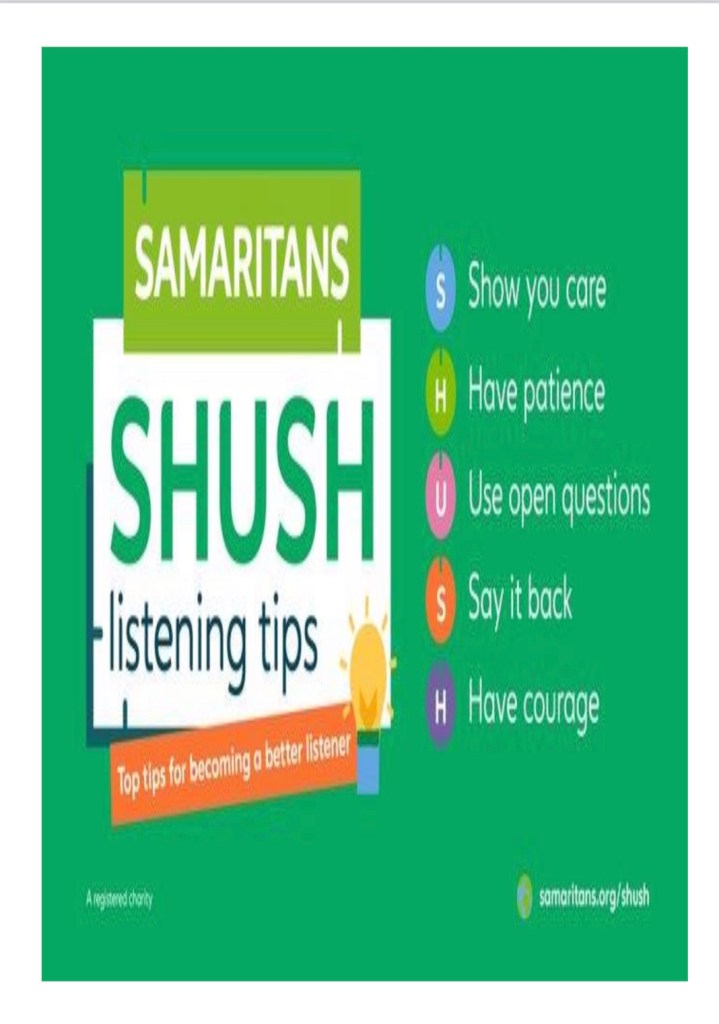
SAMARITANS – https://www.samaritans.org/

Samaritans 24 Hour Helpline

Whatever you’re going through, a Samaritan will face it with you, 24 hours a day, 365 days a year.

Call 116 123 for free

POST OFFICE: PROPOSED JOB LOSSES ACROSS ADMIN AND SUPPLY CHAIN – AGREED JOINT STATEMENT

POST OFFICE: PROPOSED JOB LOSSES ACROSS ADMIN AND SUPPLY CHAIN – AGREED JOINT STATEMENT

Further to LTB 457/20 dated 18th September 2020.

Branches will be aware of the Post Office’s proposal for c.41 potential job losses amongst CWU Represented grades across a number of sites/locations in Admin and Supply Chain. Following analysis of the proposals and in consultation with our Reps, we have now agreed 33 job losses and details have been provided to the Reps.

The agreed non-binding preference exercise closed on Friday 2nd October and we met with Post Office management on Tuesday 6th October to jointly review the outcomes. There was a good response to the preference exercise and the appetite for Voluntary Redundancy is a good fit in most locations and in some areas there is an over-subscription of volunteers. The following Joint Statement has been agreed and is being published today:

JOINT STATEMENT POST OFFICE & CWU
Restructures for Retail and Supply Chain

Further to our previous Joint Statement of 18th September 2020, Post Office and CWU have met this week to jointly review the preference exercise returns (closing date 2nd October 2020) and agree next steps.

Both parties are pleased with the overall response and thank you to everyone who returned their form. We wish to assure you, as with any changes that impact upon people, our discussions align fully with the Managing the Surplus Framework (MtSF) agreement which covers the policy and approach for dealing with surplus situations, redeployment and redundancy terms including selection criteria.

There has been a good response to the preference exercise and the appetite for Voluntary Redundancy is a good fit in most locations. There will however be people who will be disappointed as we are over-subscribed with applicants in some areas.

We currently have sufficient numbers of volunteers for VR in all areas with the exception of Swindon Stores (Admin) and we view this as a positive, further discussions regarding Swindon will be held to explore options. Consequently, at this stage we are not expecting to undertake any further preferencing for bumping purposes, although this position will be kept under review.

We have agreed that Line Managers will start to have conversations soon with those employees who have been selected by seniority to receive a VR offer. Settlement Agreements will be issued, together with the compensation estimates in line with MtSF. For those employees who wish to accept their VR offer, you will need to seek legal advice in regard to the Settlement Agreement. The Post Office will pay up to £350 for this requirement.

Where this is an over-subscription of VR applicants, Line Managers will also explain where offers won’t be made (as there are more senior applicants). Although subsequently, if somebody more senior declines their VR offer, further VR offers may be made. We understand, for some, this news will be disappointing.

HELP AND ADVICE
This situation may be unsettling for some and we are therefore fully committed to jointly providing support to all colleagues affected by the changes over the coming weeks. As a Post Office colleague you and your family are eligible for support via the colleague assistance programme provider, who operate a confidential 24/7 service. They can be contacted on 0800 6 888 777. You can continue to ask questions by emailing your Line Manager and by talking with your Union Representative.

Lee Kelly                                                  Andy Furey
Employee Relations and Policy Director       CWU Assistant Secretary
Post Office

A further meeting is being arranged to continue our negotiations. Branches and members can be assured that all stages of these negotiations are being conducted fully in line with the MtSF agreement. If members have any questions relating to this matter, they are encouraged to contact their Representative.

Further developments will be reported.

Yours sincerely

Andy Furey

20LTB493 Post Office – Proposed Job Losses Across Admin and Supply Chain – Agreed Joint Statement

Create a website or blog at WordPress.com

Up ↑